
For every game bird a hunter stalks, from turkeys to ducks, the right combination of gauges and set-ups are a necessity. It is vital to your hunting success that you know the proper gauge, shot, shell and load combinations for what you’re going to be hunting.
While you could pick up just any shotgun and ammunition to go out and bag a bird, to be successful and safe out in the field, you need to understand that each type of bird always has a better, more preferred and specific way of connecting with it.
Here at Hinterland Outfitters, we have already taken all of the guesswork out of the equation for you. Our team of experts have compiled a list of what you will need to successfully participate in one of the most popular and exciting forms of hunting: bird hunting.
Bird hunting encompasses two major types — upland hunting and waterfowl hunting.
Upland Hunting
This is a form of bird hunting where hunters pursue upland birds, which are typically found on the ground in heavy, dense vegetation. Hunters generally employ dogs to locate and flush birds from their hiding spots, causing them to take flight and expose themselves to the shooter. Upland hunting is sometimes referred to as a gentleman’s sport because of its rich traditions and historical popularity among society’s elite. Upland hunting is a very social sport compared to other hunting types, usually consisting of 2-6 hunters in a group.

Upland birds include:
- Dove
- Quail
- Pheasants
- Grouse
- Woodcock
- Prairie Chicken
- Turkey
- And many more
Waterfowl Hunting
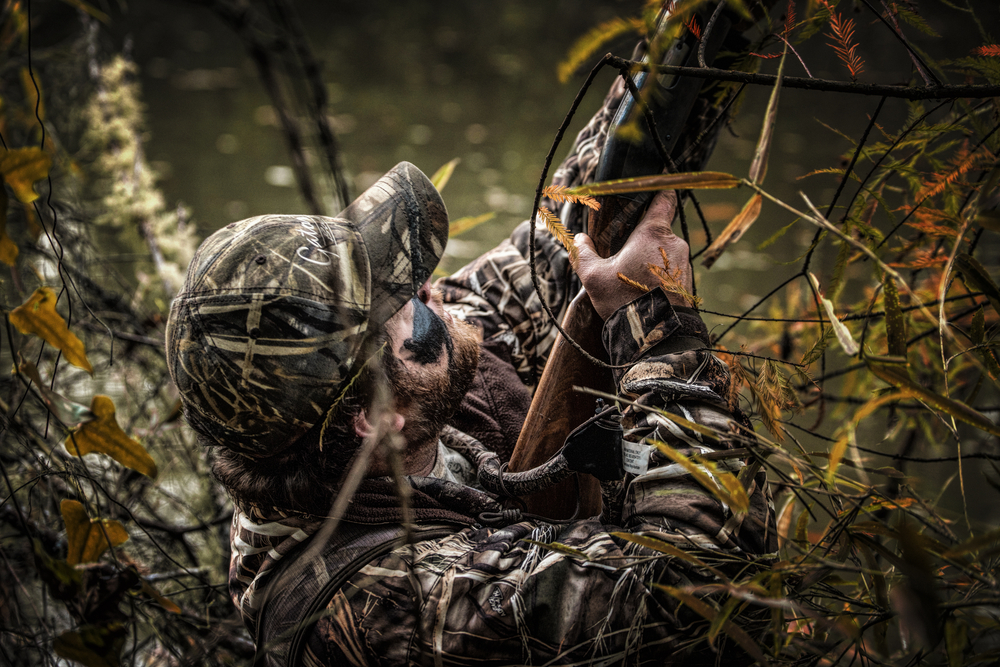
This is a form of bird hunting where the hunters pursue birds that are found near a body of water such as rivers, lakes, ponds, swamps and oceanic coastlines. Waterfowl hunting season is generally done in autumn and winter, with the time periods set by the US Fish and Wildlife Services. Hunters typically employ blinds, decoys, duck/goose calls and boats to conceal and lure birds into range.
Waterfowl birds include:
- Mallards Duck
- Canada Geese
- Canvasback Duck
- Redhead Duck
- Pintail Duck
- Snow Geese
- Puddle Duck
- Any many more
Because bird hunting occurs in such a diverse location of habitats, from high desert to marshlands, and rivers to mountain elevations, you need to make sure that you have the proper equipment for the occasion.
It is also important to understand that effective bird hunting requires a very specific and proper combination of knowledge and skill. Keep in mind that bird hunting is completely different from shooting at a stationary object, where you are required to aim and hit the target with perfect alignment.
As with hunting any living creature, there are particular factors to be aware of, such as hunting ground, environment and the specific bird’s movement patterns and social behaviors.
With few exceptions, your target is most likely moving (and usually swiftly). If you want to be successful, you must allow your eyes to lead to where you think the birds will be going, then point your shotgun and shoot. You will never have the chance to aim, as birds are not particularly stationary, especially when airborne. The lesson here is that the gun will shoot to the pointing area of your focus, and the ability to feel the lead will help you be effective and successful in the field.
Leading as it relates to bird hunting is knowing where the bird is going to be after you have pulled the trigger of your shotgun. The two most common methods of leading targets at long distances are the swing-through method and the sustained lead, as will be referenced further in this reading. The important thing to understand when trying to hit a moving target is that you literally swing through the target and fire at a blank space in front of the target. Never let the bird fall below your muzzle.
To hit a flying target, you have to keep your eye on the bird. If you let the bird dip below your muzzle, you will lose sight of it for an instant. If you keep the barrel just below the target, the muzzle stays in your peripheral vision as a blurry reference point while you maintain a tight focus on the bird. You see where the muzzle has to go and you connect the dots.
A more practiced hunter can estimate the length of the lead necessary to hit the moving target and maintain the lead as you swing with the target, fire shots, and continue the swing and firing process.
Distance, speed and the pattern spread of your ammunition will determine if you’ll hit the bird as it is moving. That is why it is so important to have the right combination of gauge, shot, shell size and load. If you are missing birds, then you need to change something in that combination.
Before the hunt, you’ll want to get your firearm ready for action. A good strategy is to start by making your way over to the shooting range for some necessary practice. You’ll want to test your gun, choke tubes and shells at different distances between 10 and 40 yards. Test shooting your shotgun from a variety of hunting positions will help you feel comfortable out in the field. Take special note of your patterns at different distances, as a tight pattern will make it difficult to hit birds at close range. Most importantly, inspect your gun, and make sure it is well-oiled and in perfect condition. It’s a hunter worst nightmare having a shotgun that malfunctions in the field.
Preferred Gauges for Each Bird
Having a high quality, reliable and accurate shotgun is important to have for any successful hunt, but you must choose the right type of ammunition. However, selecting the right shotshell for the job is not as simple as you might think, mainly because shot patterns are so varied.

That makes selecting the correct load an educated guess. You will have better success if you know the right combinations of pellet size, shot material, payload and velocity for the type of bird that you are pursuing. Here are some excellent choices to help serve as a guide.
- Pheasant – Knowing the correct gauge for pheasant hunting is a critical choice for any hunter, as pheasant own the category of America’s toughest upland bird. They are strong, medium-sized birds, so the 12 gauge is the best option for pheasant hunting as it provides enough power and options to take down this bird with ease. Pheasant tend to be taken down at a distance as they tend to warry and be swift, so we recommend 110 pellets so you will be able to strike within 30 inches. Here are a few to look into:
- 2 3/4 inch shell
- 12 gauge
- 1 ¼ ounces of #6 shot (lead), 1,300 fps
- 1 1/8 ounces of #3 shot (steel), 1,500 fps
- Duck – Duck hunting involves striking at mid-range, which usually does not require heavy loads. Ducks are taken best between 20 and 40 yards out while their vitals are exposed. Also, be aware that because duck hunting is generally located in heavy water areas, you must always buy steel shells, as lead is not permitted. Recommended pellet strikes in a 30-inch circle would be 90 for mallards and 120 for smaller ducks.
- 3 inch shell
- 12 gauge
- 1 ¼ ounces of #2 shot (steel), 1,450 fps
- Geese – This is big game for bird hunting, and geese can weight up to 15 pounds. A tough big bird to hunt, geese require something that packs a heavy punch. If you want to bag geese and ensure a clean kill, tungsten-iron has superior ballistics. Recommended pellet strikes for geese in a 30-inch circle would be 60 pellets.
- 3 inch shell
- 12 gauge
- 1 ½ ounces of #4 HEVI-Shot (tungsten-iron), 1,400 fps
- Turkey – Turkey hunting is quite difficult as turkeys are very easily spooked. When you do spot them, you are shooting at a target the size of an apple (keep in mind that it will usually be from 40 yards away), so you want ammunition that produces a deadly pattern with plenty of knockdown power. With turkey loads you want a dense cluster that can fill a 10-inch circle and carry enough energy to penetrate vitals beyond 40 yards. Recommended pellet strikes in a 10-inch circle would be 100+. Turkey hunters should invest in quality ammo, which will most likely last a few seasons.
- Dove – An upland migratory bird, doves can be very active in the field in large numbers. They prefer open habitats such as prairies, farmlands, grasslands and lightly wooded areas. Because doves are small, some beginner hunters might think “the smaller, the better” in regards to firearm and ammunition; however, small gauge shotguns in this instance would lead to ammo expenditure. For doves, we recommended 230 pellets for pellet strikes in a 30-inch circle.
- Quails – A ground-dwelling bird around 10-12 inches in length with an average weight of 5-8 ounces, quail have an extensive distribution and gather in small flocks called “coveys.” Quail are rarely seen in flight, preferring only to fly if flushed and then they quickly glide back down to the ground. Recommended pellet strikes in a 30-inch circle would be 150 pellets.
- 2 3/4 inch shell
- 20 gauge 7/8 ounce of #8 shot (lead), 1,200 fps
- Ruffed Grouse – Ruffed grouse are popular to hunt in the uppermost states and Canada, but can be hard to spot due to their reddish-brown or grayish color. To successfully hunt a ruffed grouse, you’ll have to make visual contact as it flushes, then swing ahead and shoot. These birds move quickly and are often described as a blur. Recommended pellet strikes in a 30-inch circle would be 130 pellets.
- 2 3/4 inch shell
- 20 gauge 7/8 ounce of #7 ½ shot (lead), 1,200 fps
- Woodcock – Woodcocks are small woodland birds that can be tough to locate and challenging to shoot as they fly erratically. An open choke and smaller shot sizes are recommended so that you get a wider shot pattern. Recommended pellets strikes in a 30-inch circle would be 230 pellets.
- 2 3/4 inch shell
- 28 gauge ¾ ounce of #8 shot (lead), 1,200 fps
What Chokes to Use
The invention of choked or restricted barrels allows shotgun hunters greater effective range and accuracy at distances beyond the standard 25 to 30 yards typical of a simple straight tube shotgun. The choke is positioned at the muzzle end of the barrel in order to keep the pellets in a tighter group (pattern) when they leave the barrel.
Older shotgun models employed a “fixed choke,” while modern shotguns come with “interchangeable chokes,” which screw into the barrel near the muzzle and are the current prevalent choice amid shooters today as they allow one to adjust the choke to fit the situation in which the gun may be used. Here are the most popular chokes for bird hunting.
Improved Cylinder Choke
A slightly constricted barrel allows the shot string to spread fairly quickly, enabling the pellets to spread in a wide pattern for fast flushing game birds at distances around 30 yards. Improved cylinder chokes would be an excellent choice for quail, dove, ducks other upland game at relatively close ranges.
Modified Choke
Considered a moderate constriction of the barrel, the pellets stay together longer, making the shot string denser and more useful at longer ranges. This choke is a good choice for all around use, and is used often with dove hunting, windy-day pheasants and when using steel shot to hunt for waterfowl. There is also an improved modified choke that is slightly tighter.
Full Choke
The full choke causes tight barrel constriction, resulting in the smallest spread. The shot string holds together much longer, making this choke good for squirrel, turkey and other game shot at 40 yards or longer ranges.
A full choke is not appropriate for closer targets due to the power it provides (which would lead to the target being full of lead), and also the shot pattern being too tight to hit a moving target close in. Turkey hunters may use extra full or turkey chokes for even denser patterns at long range, as turkeys are naturally wary and often taken at distances of 40 to 50 yards.
When considering which type of choke to use, make sure to consider the choke’s pattern spread. Here’s the quick breakdown from what has been mentioned above:
- Cylinder – 40-inch spread at approx. 25 yards
- Improved Cylinder – 40-inch spread at approx. 30 yards
- Modified – 40-inch spread at approx. 35 yards
- Full – 40-inch spread at approx. 40 yards
As you practice shooting with a choke, here are a few common issues that may occur, as well as solutions:
- If your patterns are the wrong size or don’t have the density required to kill game, use a tighter or looser choke accordingly.
- If your patterns are uneven, you are possibly trying to push too much soft lead through too constricted a hole. Sometimes reduced lead and a less constricted choke will actually allow you to be effective at longer range.
Finding the perfect choke is one of those things, like gun fit, that should best suit your needs, so experiment until you are comfortable and consistent with your shot. The time devoted will yield great payoff in the end.
Popular Waterfowl Shotguns
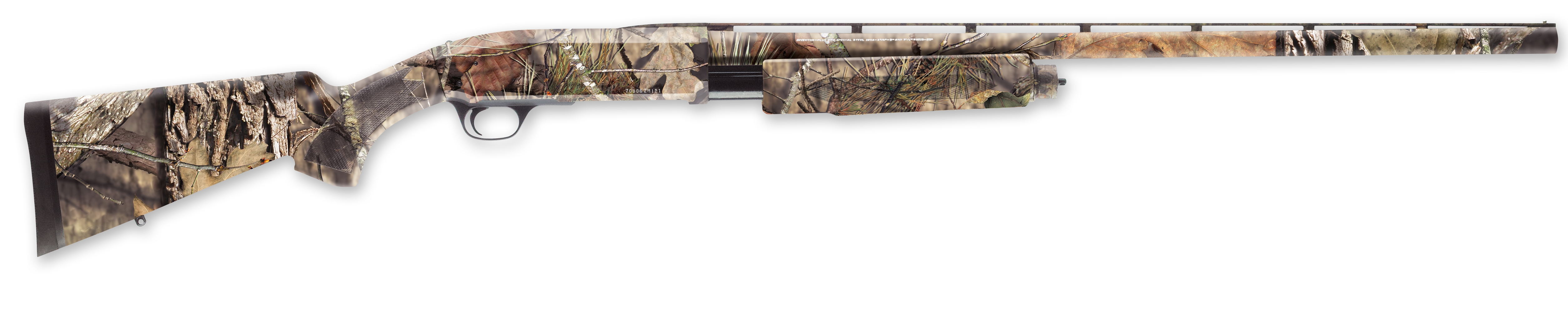
Waterfowl hunting has a way of systematically clearing out inadequate and susceptible shotguns due to the elements and environment in which the shotgun is used. A good duck and geese shotgun will pattern-shot well and be more resistant to the harsh conditions that waterfowl hunters sometimes face.
Most waterfowl shotguns will feature a synthetic stock with camouflage finishes. Make sure your shotgun has a comfortable buttstock with shock-absorbing material to greatly reduce recoil. The following shotguns on this list are among the best choices to consider when choosing a duck or geese shotgun:




Popular Turkey Shotguns
Turkey shotguns are something of a paradox, as they are shotguns that, in this instance, are fired like rifles. A respectable turkey shotgun will feature several shared traits that are different from an upland hunting shotgun.
Your best option would be to find a shotgun that has a short barrel (for ease of shifting positions in a blind or brush), a tight choke, the ability to shoot heavy loads, sling swivels, and a matte or camo finish to hide it from the turkey’s sight. The following shotguns on this list are among the best choices when considering a turkey shotgun:


Popular Upland Shotguns
Upland birds prefer interior areas over shore or water-line areas – while they can fly, they favor staying on the ground so that they may run for cover instead of flying when danger presents itself.
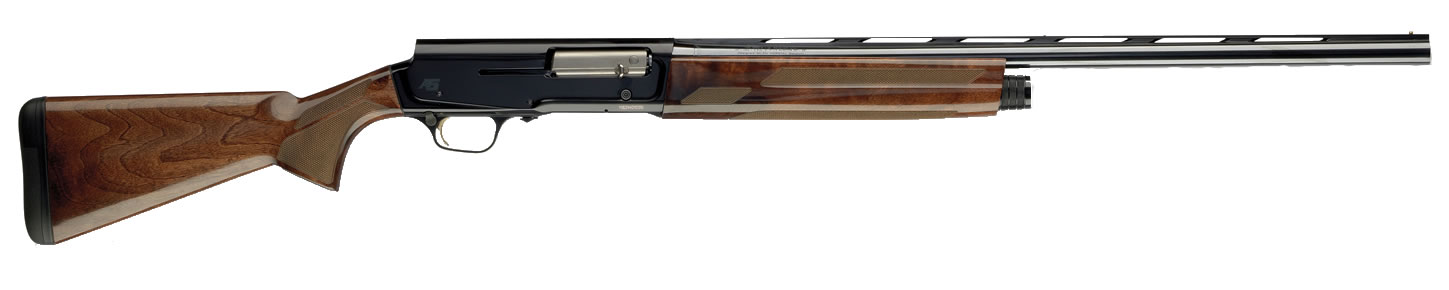
Upland birds move quickly, so you need a shotgun that is lightweight, fast shooting and comfortable. Its weight allows for a smooth swing through, steady leads and smooth, accurate shots. The following shotguns on this list are among the best choices when considering an upland game shotgun:






Popular Dove Shotguns
Doves move swiftly, so they are difficult to strike. Many shooters prefer autoloaders as they are quickly able to blast off a few loads before the dove gets out of range. A favorable dove shotgun would be a semiautomatic with a trim, easy to handle design and a soft kick.
The weight should be around 7 pounds to help diminish recoil while also providing enough weight to swing with smooth efficiency while also not being too heavy to keep up with a dove’s elusive maneuvers. The following shotguns on this list are among the best choices when considering a dove shotgun:



Purchasing a Shotgun and Ammunition for Bird Hunting
Hinterland Outfitters simplifies the process of buying shotguns and ammunition. With quality brands, fast shipping, affordable prices and industry-leading customer service, no other hunting supplier comes close to Hinterland Outfitters. Contact us for help deciding the right shotgun type and ammunition needed for the gun’s intended use.
Start the process by reviewing our How to Buy Guns Online information page or emailing us at sales@blog.hinterlandoutfitters.com or calling us toll free at 877-446-8370 to speak with one of our knowledgeable firearms specialists. And don’t forget to visit our other great products, including hunting accessories, optics, apparel, outdoor lights, knives, shooting targets and more.