
Revolvers and semi-automatics are the two primary categories of modern-day pistols. Revolver shooters are quick to point out the advantages of their handgun of choice over semi-automatic pistols. The same holds true for those shooters who prefer semi-automatics. They’ll extol the benefits of their pistol types while calling attention to their perceived shortcomings of revolvers.
The major difference between single action vs. double action handguns is what the firing mechanism does when the trigger is pulled. Although both types of pistols have pros and cons, choosing which is the better of the two ultimately comes down to the gun’s intended use and the shooter’s personal preference. A common feature shared by semi-automatic handguns and revolvers is that each is available in both single action and double action models.
Modern Day Revolvers and Semi-Automatic Pistols
Firearms with cylinders that held multiple rounds of ammunition were first introduced in late 16th century Europe. These predecessors of today’s revolvers were considered something of a novelty at the time, and failed to gain wide acceptance among shooters. It wasn’t until the 19th century that revolvers came into common use, due in large part to an innovative design from Colonel Samuel F. Colt, who would later introduce the first mass-produced revolvers, including the iconic .45 caliber Colt Peacemaker in 1873.
Revolvers remained the handgun of choice for law enforcement agencies and personal defense until the mid-20th century. By the 1980s, reliable new semi-automatic pistols such as the Glock 17 and Beretta 92 series were introduced. Since then, semi-automatic handguns have almost totally replaced revolvers for use by law enforcement and the military, although they’re still frequently carried as a back-up and off-duty weapons by police. Revolvers also continue to be widely used for self-defense, hunting, and competition target shooting.
Handgun Action Types
The action of a firearm, whether it’s handheld or shoulder-mounted, refers to the mechanical system that cocks the firing mechanism, loads, chambers and fires live ammunition and extracts and ejects spent cartridges. With the exception of break action single-shot pistols, handgun action types are single action, double action, double action only and striker fired action, regardless of whether they’re revolvers or semi-automatics. Here’s a summary of the similarities and differences between revolvers and semi-automatic handguns, and their various action types:
Revolvers
Most of today’s revolvers are double action only or double/single action, although single action revolvers continue to be a popular choice for many shooters, including collectors and those who take part in competitive cowboy target shooting. Here’s an overview of the various revolver action types:
- Single Action Only Revolvers (SAO). Firing a single action revolver requires the shooter to manually cock the hammer before each shot by pulling it back with the thumb of the trigger hand. As the hammer is being cocked, the cylinder that holds the ammunition is rotated, which brings the next live round into alignment with the barrel. A light squeeze of the trigger releases the hammer, which in turn strikes the firing pin, causing it to hit the primer of a chambered live round launching the bullet down the barrel and out of the muzzle toward the target. Prior to firing the next and subsequent rounds, the process of manually cocking the hammer needs to be repeated after each pull of the trigger.
Single action handguns have fixed cylinders, which means cartridges can only be loaded one at a time through a gated port on the firearm’s right side. Spent cartridges are individually removed through the same port by pressing the spring-loaded ejector rod beneath the barrel to the rear. Single action revolvers, due to their short, light pull and superior trigger control are generally more accurate than double action revolvers, and are often preferred by hunters and target shooters. The Taylors Smoke Wagon is a good example of a single action revolver.
- Double Action/Single Action Revolvers (DA/SA). Double action revolvers, which are also called double action/single action (DA/SA) revolvers, combine the features of both types of action. DA revolvers give the shooter the option of either manually pulling back the hammer prior to firing as with a single action revolver, or squeezing the trigger to cock the hammer, advance the cylinder, release the hammer and fire the round in a single step. DA revolvers also give the shooter the option of either continually pulling the trigger for rapidly firing consecutive rounds or thumbing back the hammer between each shot for more accurate shooting when the situation permits and time isn’t an issue.
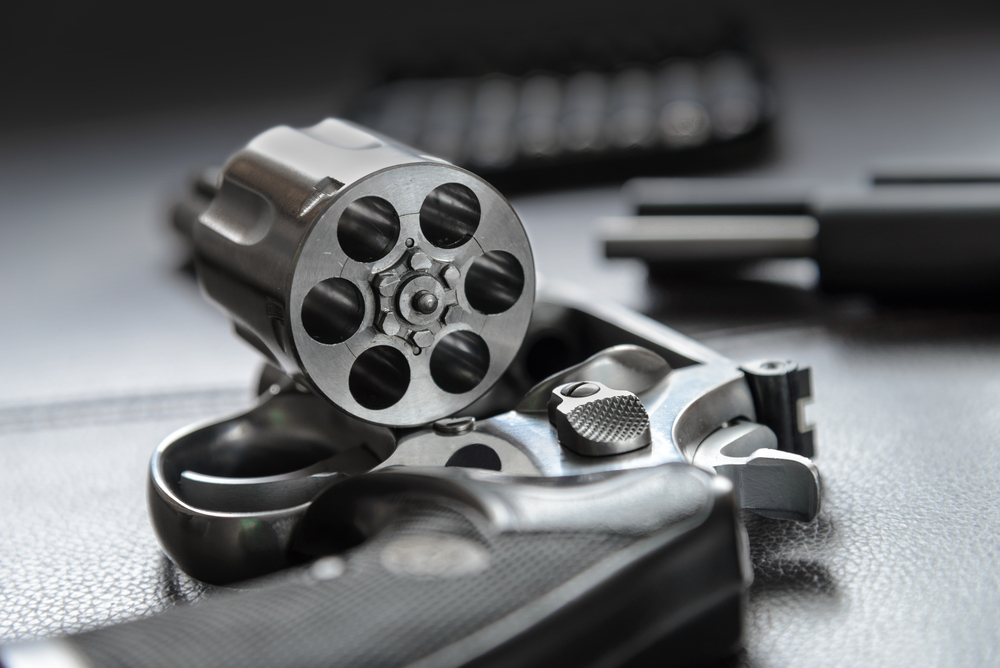
Double action revolvers, such as the Ruger SP101 typically have swing-out cylinders, making them much faster and easier to load, empty and reload than single action revolvers. Right-handed shooters push the cylinder release latch on the left side of the frame with the thumb of the shooting hand, which causes the cylinder to pivot outward. Since most cylinder release latches are on the left side of the frame, left-handed shooters must use the thumb of the non-shooting hand to unlatch and release the cylinder, which can be somewhat cumbersome. All spent rounds are removed simultaneously with a single push of a spring-loaded ejector rod at the front of the cylinder. Live ammunition can then be either loaded individually by hand into the cylinder’s empty chambers or with the help of a speedloader similar to the Safariland JC7. Double action revolvers are often preferred over single actions for defensive purposes because of their higher rates of fire and faster and easier reloading.
- Double Action Only Revolvers (DAO). Although the hammer on a double action only revolver can’t be manually cocked, DAO revolvers are loaded, fired and reloaded in exactly the manner as described above. Some double action revolvers don’t have external hammers; rather, they use an internal striker mechanism that’s cocked and released when the trigger is squeezed. Hammerless handguns, known as striker fired actions like the Ruger LCR, are preferred for concealed carry since there’s no hammer to snag as the gun is being drawn from a pocket, purse or holster.
Semi-Automatic Pistols
After the shooter chambers the first round by pulling back and releasing the slide mechanism on a semi-automatic handgun, squeezing the trigger causes a shot to be fired, the spent cartridge to be ejected and a fresh round automatically extracted from the magazine and seated in the chamber. The process is repeated with each subsequent pull of the trigger until the magazine is empty. As with revolvers, semi-automatic pistol action types are single action, double action, double action only and striker fired.
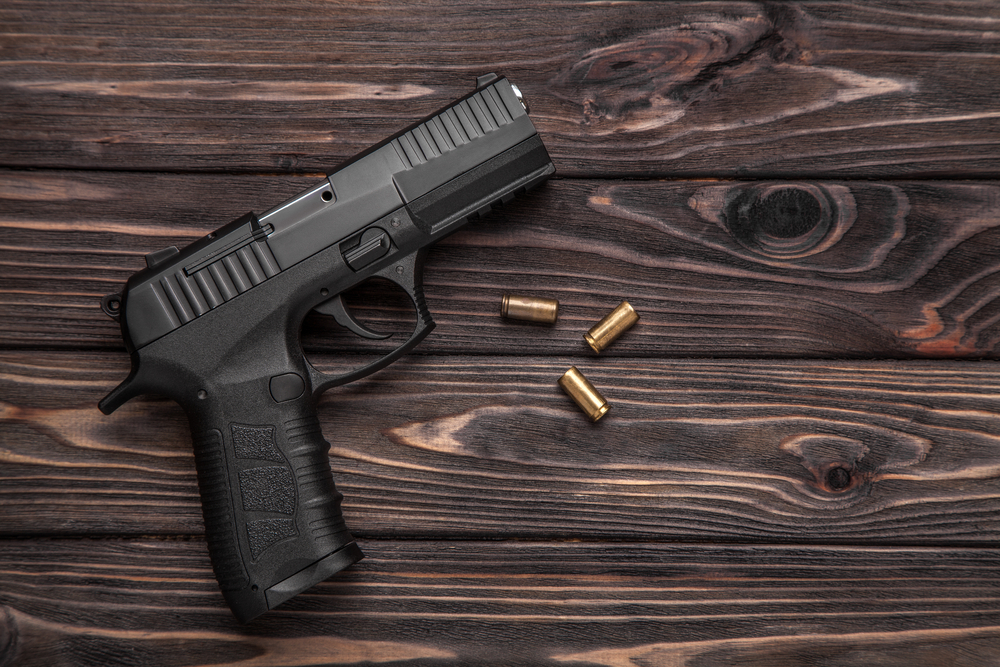
- Single Action Only Semi-Automatics (SAO). Early semi-automatic handguns, such as the German Luger and the Colt Model 1911, were single action firearms, meaning the slide must be manually pulled back to extract the first round from the magazine and cock the external hammer prior to firing. When the slide is released and returned to its original position, the round is chambered and ready to fire once the safety has been disengaged. The recoil from the first and subsequent shots automatically drives back the slide, which ejects the spent round, strips a fresh cartridge from the magazine and re-cocks the hammer. The Springfield TRP Operator handgun series are examples of single action semi-automatic pistols.
- Double Action/Single Action Semi-Automatics (DA/SA). The first double action semi-automatic pistol was the German Walther, which was introduced during the1920s and used extensively at the time by law enforcement agencies. After the slide of a double action semi-automatic is pulled back and released to cock the hammer and chamber the first round, each pull of the trigger will fire a shot. When the safety is disengaged and the trigger is pulled (thus firing the first round), the recoil forces the slide mechanism back, which re-cocks the hammer(single action mode) and chambers a live round with every pull of the trigger until the magazine is empty. A double action semi-automatic with a chambered round can be carried either with the hammer cocked and the safety engaged, or the hammer can be de-cocked and returned to the cocked position by thumbing it back again when it’s time to be fired. Many law enforcement officers now carry double action semi-automatics as their primary on-duty weapons. The Sig Sauer P226 Legion is a good example of a double action semi-automatic pistol.
- Double Action Only Semi-Automatics (DAO). Manually pulling back and releasing the slide of a double action semi–automatic handgun cocks the hammer or striker, strips the first cartridge from the magazine and seats it in the chamber. Each time the trigger is pulled, the hammer or striker is released from the cocked position, which fires the chambered round. The energy released by the fired round extracts and ejects the spent cartridge, strips and seats a fresh round and re-cocks the firing mechanism. Each trigger pull of a DAO semi-automatic requires the same amount of pressure, unlike double action/single action semi-automatics. The first trigger pull of a DA/SA, unless the hammer has already been manually cocked, is longer and requires approximately twice the pressure as subsequent pulls, since the first pull must also cock the hammer.
Double action only semi-automatic pistols are typically small, concealable self-defense handguns. A good example of a concealable double action only semi-automatic handgun is the HK USP. 9 Because of their longer and stiffer trigger pulls, DAO semi-automatics are rarely used for target shooting or hunting. Exceptions are the Glock line of striker fired (similar to DAO pistols) handguns such as the Gen4 Glock 34 and Glock 35 with shorter, smoother and lighter trigger pulls. Both are extremely accurate and widely used by competitive handgun shooters.
- Striker Fired Action Semi-Automatics. The key distinction between a striker fired semi-automatic and a double action semi-automatic is that the striker-fired has an internal “striker bar” rather than a hammer. The striker bar is essentially a spring-loaded firing pin that consists of a slender, pointed rod encased in the spring. When the trigger is pulled, the striker bar is released and makes contact with the primer embedded in the cartridge’s casing, causing the internal propellant to ignite and launch the projectile.
After a striker fired action semi-automatic is cycled, the striker bar is left in a partially cocked position. When the trigger is pulled, the spring mechanism moves the striker bar to the fully cocked position and then releases it, causing the striker bar to make contact with the cartridge casing’s primer, which ignites the internal propellant and launches the projectile. The striker bar then returns to the partially cocked position in preparation for the next pull of the trigger.
In addition to the Glocks mentioned under DAO handguns above, other examples of striker fired semi-automatics include the HK VP9 and Sig Sauer P320.
Pros and Cons of Single Action Vs. Double Action Handguns
Many of the following points will read as pros about each firearm type, which is great! The important thing to keep in mind is that you will discover what is a pro or con for you as you practice with each action and firearm type, respectively.
Revolvers
- Single action revolvers are generally more accurate than double action only revolvers
- A single action revolver’s trigger pull is shorter, lighter and smoother than a double action revolver, which allows for faster follow-up shots
- A double action revolver can be fired faster than a single action revolver, since it’s not necessary to manually cock the hammer after each shot
- A double action or double action only revolver’s longer and heavier trigger pulls lessens the danger of a shot being fired accidentally in an intense or confrontational situation
- A double action revolver is ready to fire more quickly than a single action, since it’s not necessary to manually cock the hammer
- The hammer of a single action revolver must be manually cocked before each shot which is fine for target shooting or hunting, but can be a major drawback in a defensive situation
- Single action revolvers are generally considered a better choice for hunting and target shooting, while double action revolvers are normally preferred for defensive uses
- A double action revolver can be reloaded much more quickly and efficiently than a single action revolver
Semi-Automatics
- As with single action revolvers, the trigger pull on a single action semi-automatic pistol is shorter, lighter and smoother than a double action only, which allows for greater accuracy
- When shooting a single action semi-automatic pistol, the hammer needs to be manually cocked only before the first shot is fired, which allows for faster follow-up shots
- When firing a double action/single action semi-automatic is completed with live rounds still remaining in the magazine, the hammer will be in the cocked position, requiring the shooter to de-cock it before reholstering
- Striker fired semi-automatics typically have a longer, heavier trigger pull, which result in safer usage and consistent operation making it a favorite for concealment pistols.
- DAO semi-automatics eliminate the need to manually cock a hammer
- There is no external hammer to potentially snag when drawing a hammerless DAO
- With Double/Single Action semi-automatics, the striker bar returns to the half-cocked position after each pull of the trigger making follow-up shots much faster and smoother than DAO
Buying a Handgun Online
Whether you’re interested in a pistol for home or business defense, a concealed carry firearm, are a target shooter or handgun hunter, you’ll find everything you need at Hinterland Outfitters.
Single action vs. double action, revolver vs. semi-automatic, Hinterland Outfitters has them all. We have a huge inventory of handguns, ammunition and handgun accessories, all at prices to fit virtually any budget. Major handgun brands we carry include:
- Glock
- Sig Sauer
- Heckler & Koch
- Colt
- Ruger
- Smith & Wesson
- Beretta
- Taurus
- Springfield Armory
- Magnum Research
- CZ-USA
- Wilson Combat
- And many more
Federal regulations require that all handguns sold online be shipped only to a dealer with an active Federal Firearms License (FFL). This can be a sporting goods store, local gun shop, pawnshop or other licensed individuals in your area. The dealer to whom the handgun will be shipped will arrange for your background check to be completed and handle all necessary paperwork. For more information on purchasing a handgun online, please see How to Buy Firearms Online before placing your order.
Questions? Contact us by email at sales@blog.hinterlandoutfitters.com or call us toll free at 877-446-8370 to speak with one of our knowledgeable firearms specialists who will be pleased to help you choose the handgun type, caliber, action and brand that’s best for your intended use.