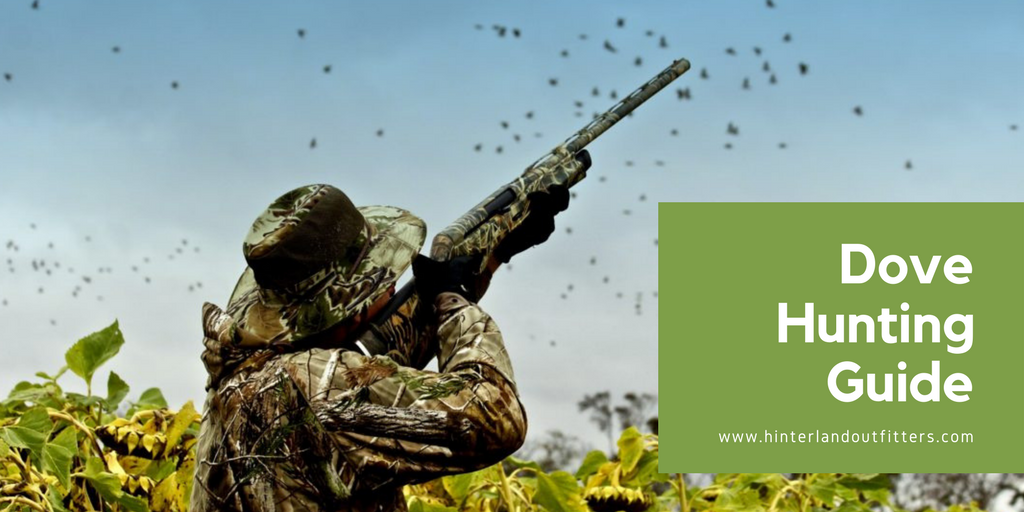
Dove hunting didn’t really gain much popularity until the late 19th century and early 20th century. Much of the reason for this is that there were plenty of other, more desirable North American game birds—duck, turkey, geese, quail, prairie chickens and pigeons. These birds were more desirable due to their larger size, and with turkey, quail and prairie chickens, hunters enjoyed white meat. Near the end of the 19th century, quail and pigeon populations were greatly decreasing, and the passenger pigeon was on its way to extinction. Hunters found themselves paying more attention to doves, which had played a role in many Native American diets for thousands of years.
Initially, dove hunting wasn’t considered much of a sport because they were so plentiful, and many hunters saw it as the kind of hunting for the lazy sportsmen. However, as more and more hunters took to the field after dove, they found this small bird challenging to hit, and the sport took off.
Today, dove hunting is generally the first season to open (September), and every fall, millions of hunters head into the field to bag their limit of doves. There are essentially two types of dove hunted throughout the United States and other parts of the Americas—mourning doves and white-winged doves—and these quick, aerobatic birds offer a great challenge to hunters of all ages and skill.
Dove hunting is a great tradition for family and friends, which tends to be as much of a social event as it is a hunt. Dove hunts usually take place in the late afternoon (some hunters prefer morning hunts), and typically end with a cookout, where everyone comes together to recount detailed stories of the day’s events. Dove hunting creates a relaxed atmosphere that is great for new and young hunters, and the hunt itself provides challenges for veterans and new hunters alike.
What Gear Do You Need for Dove Hunting?
Before diving into the most important gear you need for a dove hunt (shotguns and ammunition), we will go over a checklist of gear you should bring as well as explain the reasoning behind it.
- Shotgun: The most important piece of equipment you need to hunt dove is a shotgun. We will dig into this in more detail in the following section, but to be brief, just about every gauge and action can and is used for dove hunting. Most hunters prefer 12-, 16-, or 20-gauge shotguns, but 28-gauge and .410 bore shotguns are also used.
- Ammunition: We will get into some popular loads for dove hunting later on. A couple things to note is that you almost always want to bring at least 3-6 boxes of ammo along, and smaller shot sizes (7 to 9) tend to work better as they don’t wear out your shoulder and you get more shots per load.
- Decoys: You’ll want to have some dove decoys to place out in the field. We recommend 5 decoys to spread around. A couple decoys on stakes with spinning wings, like the Mojo Voodoo Dove Decoy, are a great complement to foam decoys you can attach to branches, fences and sunflower heads
- Shooting Glasses: You’ll want a nice pair of shooting glasses to offer eye protection and help shield your sight from sun and glare.
- Gun Oil: Having a little gun oil on hand to lube up some dry spots on your shotgun before heading out will help keep your action cycling smoothly and your firing pins snapping cleanly.
- Gun Cleaning Equipment: Along with having a bit of gun oil handy, you may want to have a few other things to clean your shotgun before and after your hunt. Something as simple as a BoreSnake will keep your shotgun firing consistently and accurately. You can also create a light cleaning kit with a couple clean rags or microfiber cloths to wipe things down quickly as well.
- Recoil Reduction Equipment: Although recoil reduction equipment is not necessary for every hunter, it can help to reduce some of that shoulder pain at the end of an afternoon shooting dove. You tend to take quite a few shots when dove hunting, so something like a recoil pad will help tremendously if you suffer from shoulder pain after shooting.
- Good Boots and Socks: At the end of the day, you’ll be grateful for having a good pair of boots on your feet. Some wool or cotton socks will also help wick moisture from your feet and keep you feeling comfortable.
- Hearing Protection: Not only are you taking a lot of shots while dove hunting, but so are your buddies. Some good hearing protection will make sure you’ll be able to hear everyone’s stories at the end of the day. Save your ears and at least bring some earplugs.
- Side-Carry Shooting Pouch or Shell Vest: You’ll need something to carry all your backup ammunition, making it easy and convenient for quick reloads.
- Hunting Vest and Ice Chest: Make sure you take care of the birds you shoot. Oftentimes it is really hot when you’re out there dove hunting, and you don’t want your birds to spoil. A hunting vest makes it easy to carry birds back to a shady place where you can spread them out to cool. Another good idea would be to have a cooler with ice nearby that you can put the birds into.
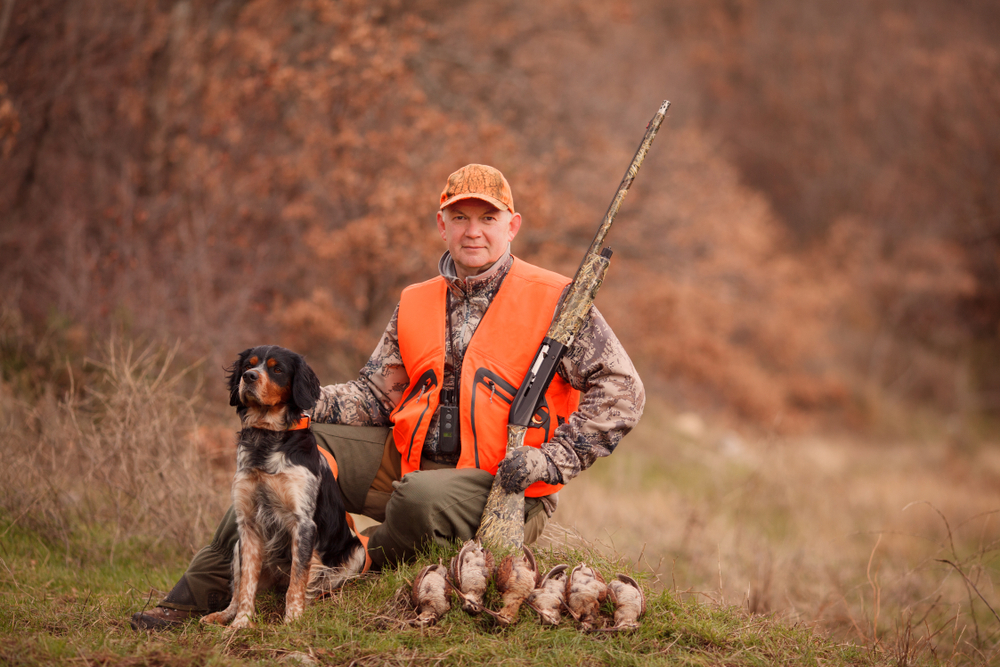
Certainly, you’ll hear about other gear friends and fellow dove hunters swear by. We just wanted to provide you with most of the basics to get you started. Once you get into dove hunting, you’ll figure out the DIY dove kit that works best for you.
What Makes a Good Dove Hunting Gun?
Just about any shotgun will do the trick. While doves can be speedy and challenging to hit, it doesn’t take much to bring one down. A good dove gun is the shotgun you love to shoot doves with. Whether it’s a family heirloom, a higher gauge you’re practicing with for other hunting seasons or a small bore shotgun for more of a challenge, you’re bound to land some dove as long as you’re comfortable with the shotgun. With that being said, there are some shotguns that will work better, or at least offer some advantages to ensure you bag that 15-bird limit.
- Gauge: Most dove guns are 12-, 16-, 20- or 28-gauge, but some dove hunters also use .410 bore. Essentially any gauge will work, but smaller calibers tend to be a more choice for younger or smaller hunters because they have less recoil than higher calibers. Less recoil makes follow-up shots easier, resulting in better accuracy from shot-to-shot. 12 and 20 gauges are still the most popular with dove hunters.
- Action: Determining the best action for your dove shotgun is really a matter of preference. Because dove hunting has a classic social tradition, many hunters use over/unders or side-by-side shotguns. Since federal regulations require that dove hunters only have three total shells loaded at a time, these break action shotguns only have a one-shell disadvantage, and they tend to be lighter in weight and shorter overall, which makes them much easier to maneuver for quick shots. Now, semi-automatic shotguns may be some of the most popular shotguns for dove hunting as they offer quick and smooth cycling to allow for speedy, accurate follow-up shots. In the end, it all depends on what you like using and feel most comfortable with.
- Choke: Older shotguns generally have fixed choke tubes, so if you’re looking for a classic dove gun, a fixed modified choke is a good all-around choice. Most modern shotguns, however, allow you to swap out different choke tubes in order to have more control over the spread and pattern of your shot. A lot of dove hunters like to use a modified choke tube, but improved cylinder chokes are becoming the choke tube of choice because it works really well for shots out to 30 yards, which can be easily achieved today with strong decoy placement and a good flyway.
- Weight and Barrel Length: Generally, you want a lightweight gun because it makes swinging shots a bit easier, and your arms won’t fatigue as fast from constantly lining up shots. Additionally, you want the shotgun to have a nice balance, so the weight is distributed evenly on either side of the action. This really helps you have more stabilized shots, and helps you acquire your shot faster. For a well-balanced shotgun, try to aim for a barrel between 26 and 30 inches, with 28 inches being a near perfect length for most shooters.
Finding the right gun is just one part of the puzzle. It all comes down to how much you practice with it and get comfortable with the shotgun.
Popular Dove Hunting Guns
The following is a list of our favorite dove hunting shotguns, which all have their own specific advantages when it comes to throwing shot at doves.
- Remington 1100 Sporting: The Remington Model 1100 Sporting is a semi-automatic shotgun that comes in 12-, 20- and28-gauge and .410 bore. This versatile shotgun functions as a great go-between for skeet, dove, waterfowl, turkey and much more. The 28-inch barrel gives the shotgun a nice balance and it allows for swapping out different chokes. Included with the shotgun are skeet, improved cylinder, light modified and modified choke tubes.

- Browning Citori 725 Field: The Browning Citori 725 Field over/under shotgun gives you the rugged durability you’d expect from a Browning break action shotgun. This classic dove gun comes in 12-, 20-, 28-gauge and .410 bore, so you have plenty of options when it comes to caliber. You can choose between 26-inch or 28-inch barrels, which both provide the swift balance you need to pluck doves on the swing. The 725 also features the new FireLite mechanical trigger, which makes the trigger pull extra light and comfortable.

- Beretta 686 Silver Pigeon: It’s tough to beat the quality and value of a Beretta 686 Silver Pigeon over/under shotgun. This premium break action shotgun comes in 12-, 20-, 28-gauge and .410 bore, so you have all the options you need for a perfect shooting experience. This compact and beautifully finished gun makes a great family heirloom to pass on to your children and your children’s children—they’ll be knocking doves out of the sky for many years to come with one of these Berettas.

- Winchester Super X3 Field: The semi-automatic Winchester Super X3 Field shotgun features a well-balanced, 28-inch matte blued barrel and a dark walnut stock. The 20-gauge SX3 shotgun includes an Active Valve System for smooth cartridge cycling, and the safety is ambidextrous so left- and right-handed shooters alike can shoot this gun with ease.

- Browning A5 Hunter: If you’re looking for a 12-gauge semi-automatic shotgun, the Browning A5 Hunter comes in a wide array of options, featuring 26-, 28- and 30-inch barrels with either a 3-inch or 3.5-inch chamber. Nicknamed “The Humpback,” the Browning A5 or Auto-5 was the first truly successful semi-automatic shotgun. This modernized version features a Kinematic Drive System that utilizes the recoil energy of the shotgun to cycle the action. Reliable in all weather extremes, this recoil-operated action will cycle virtually any load down to 1-ounce field loads with ease.

- CZ Upland Ultralight : A light weight all-purpose shotgun that won’t break the bank, the CZ Upland Ultralight over/under shotgun remains one of CZ’s most reliable shotgun. Weighing in at just 6 lbs, it is a full 2 lbs. lighter than similar steel-framed models, making it one of the lightest in its class. Available in both 26″ and 28″ models, this gun is ideal for long days in the field.

- Mossberg Silver Reserve II: The Mossberg Silver Reserve is the most affordable over/under shotgun that made our list of favorites. It comes available in 12 gauge, 20 gauge, 28 gauge and .410 bore with 26, 28, 30 and 32 inch barrel options. The shotgun features a choice of shell extractors or ejectors, corrosion resistant chrome-lined chambers and barrels, tang-mounted safety with integrated barrel selector, dual locking lugs ensure solid lock-up and long-term reliability.

Popular Loads for Dove Hunting
When it comes to choosing the right loads, don’t go too inexpensive. Yes, you will end up shooting quite a few rounds on a hunt, but a better load can make the difference between coming home with a sore shoulder and a full limit. Considering the average hunter hits a dove every 4 to 5 shots, a quality load can really help make up some difference. Better quality lead shot will shoot more consistent patterns and should lower your average. Heavy dove loads or quality target loads are where you should put your money. Typically, you’ll want smaller shot sizes, such as 7, 7 1/2 or 8 with a 2 ¾ inch shell because they won’t wear out your shoulder as much and you’ll get a more dense pattern with more shot per load.
Our favorite dove hunting loads include:
- 12 Gauge 2 ¾ inch Shell 1 Ounce of 7 Shot (steel), 1,300 fps
- 1 1/8 Ounce of 7 ½ Shot or 8 Shot (lead), 1,180 fps
- 20 Gauge 2 ¾ inch Shell 7/8 Ounce of 8 Shot (lead), 1,200 fps
Further Dove Hunting Tips
Dove hunting can be tricky and challenging, especially for new hunters, and the following tips for dove hunting will certainly help you bag a limit on your next outing.
- Place Decoys Strategically: You’ll want to place your decoys close to your stand or shooting position to try to draw the birds in close. Make sure you’re placing the decoys facing into the wind, as doves land and take off facing the wind.
- Understand Dove Habits: Understanding the habits of doves will help you pinpoint great shooting positions and high-volume areas. For one, doves eat seeds, which means they like wheat, oats, corn, sunflowers, millet and many weed seeds. They tend to prefer feeding on the ground throughout the day, and you’ll find them near watering holes in the early morning, late evening and about an hour during midday.
- Scout Your Field: It’s important to scout before going out on a hunt. It’s best to scout before 9am or after 3pm, as that’s when doves are usually on the move. Many hunters like hunting around recently harvested fields, as they attract hungry doves. Watering holes and graveling sites are also great places to scout for doves. When you finally see some, keep an eye out for more. The more you see, the better and more used the site probably is.
- Try for Shots Less than 30 Yards: It’s best to try to take birds within 30 yards. Modern ammunition certainly allows for more distance on your shots, but somewhere in and around 30 yards is a good distance to allow your shot to spread a bit but not too much. You’re aiming for about a 25 to 30-inch pattern spread.
- Swing Through Your Shot: Doves move fast, and in order to make sure your shot hits them, you’ll want to swing through your shot. Begin by leading the bird, and as you shoot, continue to swing your gun along the bird’s flight line. This will increase your chances of a successful shot.
Hinterland Is Here For All Your Dove Hunting Needs
Whether you’ve come here looking for a new shotgun, or just need to pick up some decoys and dove loads, we’ve got all the dove hunting equipment you need to get out in the field come September. Don’t hesitate to contact us today with any dove hunting gear questions. Our friendly and knowledgeable staff is ready to answer all your questions and set you up for a plentiful dove hunting experience.
Related Links: