For most hunters and animals alike, the warm summer months are a wonderful time to relax and get a bit lazy due to the heat. Food is usually plentiful, and animals spend their summertime frequently eating and sleeping to gain weight for the fall. In contrast, many hunters enjoy warm summer vacations, forgetting about chasing favorite prey until the weather begins to cool.
But don’t be fooled by summer’s hazy heat stupor—there is still some excellent hunting to be had during the sizzling summer months that many sportsmen often overlook. A few necessitate a little travel and inspiration, but with minimal effort, you can discover prodigious hunting from June to August.
Before you know it, you’ll be primed and ready for September’s glorious return to the upcoming Fall/Winter hunting season. For the avid hunter who wants to stay sharp and on top of their game and is looking for some summer hunting, here is a list of 5 fun summer hunts that are guaranteed to help put the pep back into your step and keep you on target during the summer heat wave.
Summer Hunting: Firearm Prep
But first, because you don’t want to get caught unaware when prime hunting season rolls around and miss your chance at that good buck, here is some inspiration to get you out summer hunting and help you stay ready well before opening day of hunting season. Consider the following, and spend a little extra time in the field this summer so that you’ll be ahead of the crowd.
The long summer days are perfect for keeping you and your weapon in top condition and working order. Making that good, clean shot means that you spend plenty of time tuning your firearms. Summer hunting gives you a chance to practice finding the right load combination and keep your weapon sighted in.
There is nothing worse than finding your hunting gear in poor condition after it has been sitting all summer due to any number of problems. Since the summer is slower and you may have just done a bit of a cleaning during spring, the summer hunting months are the perfect time to address any issues you may find with your equipment. Make sure to inspect and test all of your gear so that you can be aware of any repairs or potential purchases you need to make to ensure that you’re prepared not just for summer, but for the rest of the year.
If you are spending time in your favorite fall hunting grounds during summertime, you now have the opportunity to talk with the locals who may also be enjoying time away from work or a long weekend. Gathering local knowledge about popular areas can provide you with a clever idea of where the travel patterns are for the prey you wish to pursue.
Also, if you are summer-hunting in an area you plan on visiting during the regular season, you can always try your hand at food plots and practice your plant and food management skills. Attracting game to your area will up your odds of success in the fall.
Remember: the more you hunt your favorite spots, the more you can spot game movement. Make sure to also research and ask park representatives and land owners about setting up cameras on public lands so that you can improve your understanding of where the game is and observe activity patterns as you hunt.
Some final inspiration to get you out hunting this summer is that it is an opportunity to train for stamina. Keeping active by hunting this summer will help maintain your readiness for opening day. The most frequent problem hunters experience is not being in good enough physical condition.
You need to be able to handle the constant foot travel when carrying gear and equipment, especially when you may be chasing game at high elevations. Whether at the gym or out in the field/proposed hunting grounds, focus on activities that allow you to work on cardio and strength-training.
Once you have inspected your firearms and gear, here are our 5 hunts we think you should do this summer.
Summer Squirrel Hunting
Squirrel hunting is one of the most popular summer hunting pastimes and the perfect get-up-and-go off-season pursuit. Squirrel hunting is a great activity for plenty of .22 rifle or pistol challenge shots, or 20-gauge shotgun practice to help improve your woodsman skills and marksmanship for the main event come season openers in the fall.
If you are an excellent squirrel hunter, chances are you will be a good deer hunter. When you decide to go squirrel hunting, some hunters feel shotguns are the best choice because squirrels use trees that are cloaked in leaves, but shotguns can leave a lot of shot in the meat.
That’s why it’s important to consider some small-bore rimfire rifles, which are great when squirrels remain in one place (the shotgun is actually better if a squirrel runs or jumps).
Calibers can range from .22 Long Rifle to the .17 HMR and .17 WSM, and many hunters find it vital to add a sling and riflescope to complete the textbook squirrel hunting rifle. Whether you carry a classic lever action rifle, a bolt action or possibly a single shot, hunting pursued with a squirrel rifle helps keep the sport challenging and fun.
For those hunters who like to know a bit more about the types of tree squirrels they are hunting, here is a brief list.
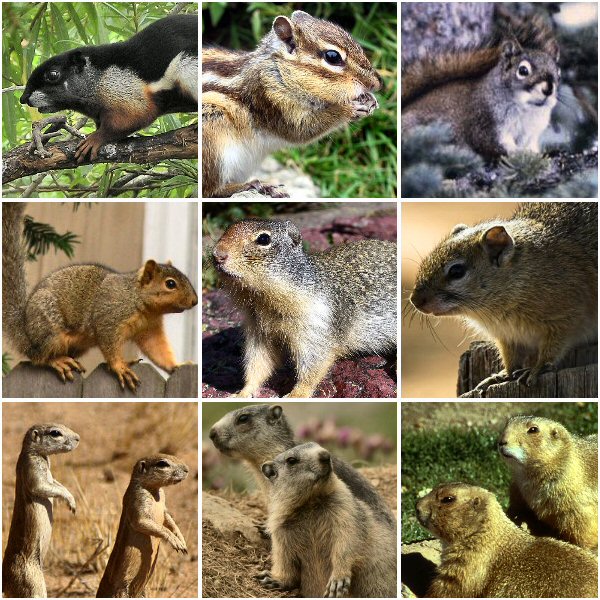
- Fox Squirrels – Largest of tree squirrels, have predominantly gray fur with rusty orange underbellies and tails.
- Gray Squirrels – The most common member of the family, gray squirrels are medium size, and may be found in colors of black, white, brown and (of course) gray.
- Abert’s Squirrels – Easily identified by their long, gray-black ear tufts, and are closely associated with inhabiting ponderosa pine forests.
- Pine Squirrels – This extremely vocal group includes red, pine and Mearns squirrels. The smallest of the tree squirrels, their diet consists of pinecones and seeds.
Bow-Hunting Elk
Bow-hunting season for elk in most western states occurs around September 1; however, bowhunting dates will vary depending on which state you live in or are in close proximity of, with Utah, Nevada and Colorado leading off with early season openers for archery in late August. The wonderful thing about bowhunting is that it can add months to your hunting season.
For those who have not hunted elk before, they tend to weigh upwards of 1,100 lbs., have a lifespan of between 8 to 12 years, and stand around 4 to 5 ft. in height at the shoulder. A bull elk’s antlers may reach 4 feet above its head, so that it towers 9 feet tall.
During the late summer breeding season, the bugling of bull elk is a startlingly haunting call that echoes through the mountains, and marks prime elk hunting season for archers that lasts through late September (rifle season is typically September through mid-November). Today, elk live principally in western North America, particularly in mountain landscapes along the Rocky Mountain range.

If you’re in the market for a new bow, it’s imperative you research the best options that will fit your needs and skill level. Compound bows are usually the most popular with elk hunting because they are more efficient and give back a higher proportion energy compared to other bow types.
Generally, a more powerful bow is harder to draw, and in archery, accuracy is what matters most. However, a harder hitting bow has major advantages, like a flatter arrow trajectory, and more momentum equals better penetration.
There is an array of different types of arrows that would be effective for elk. A field point allows an arrow to correct itself in flight quickly and can be fairly accurate; that being said, you may already have a few broadheads in your arsenal. Broadheads catch the wind more than field points, which slow down the arrow’s ability to correct itself. Spend time getting properly set up and fine-tuned with plenty of practice before heading out into the field.
The bottom line in bowhunting is that you’ve got to get in relatively close if you want to be successful. Study hunting strategies and learn all you can about the animal you are hunting. By knowing exactly how an animal will behave, you’ll be able to lure them in close enough for a successful shot.
Sharpen Your Shooting Skills this Summer with Prairie Dogs
Prairie dogs are burrowing rodents that live in large colonies in the grasslands of central and western North America. The most prolific species is the black-tailed prairie dog, which is the only species of prairie dog found within the immense Great Plains region of North America. There are four other species of prairie dogs: white-tailed, Gunnison’s, Mexican and Utah.
Head east of the Rocky Mountains and you will find that prairie dogs proliferate along stretches of short sage, natural meadows, and seeded pastures. Some ranchers may even be privy to your advances for hunting prairie dogs, as prairie dogs compete directly with livestock forage and their vast network of holes can be a real hoof-hazard to livestock.
Any rifle or handgun is acceptable for prairie dog hunting, which makes prairie dog hunting a fantastic summer opportunity for shooters to get lots of experience. A popular small rifle for prairie dogs would be a .22 rimfire or a .243 center fire caliber. The best rifles for prairie dogs are flat shooting rifles, as these are not stationary animals. It is also recommended to bring plenty of ammo on your prairie dog hunt, as shooting through 200+ rounds a day is not uncommon.
Spotting a prairie dogs at distance is difficult, since they are small targets and often offer only a partial view when hidden behind a mound. Bring a quality pair of optics, like binoculars or a spotting scope. If you have a precision rifle and like to take longer shots, a proper scope will make a big difference (something in the 4-16x range would be ideal).
Prairie dog hunting is a long-range challenging sport, and an excellent way to sharpen your shooting skills and train your eye for fall.
Wild-hog Hunting is Textbook Spot-and-Stalk Summer Hunting
Wild hogs are not native to the Americas and were brought over by early European explorers and settlers. The wild hog is a productive game animal, as it can have 15+ piglets in a single litter and breed three times a year. Today, the wild hog population is widespread throughout the southern United States where millions of hogs roam freely.

Wild hog hunting is textbook spot-and-stalk summer hunting that will allow you to hunt with practically any firearm or instrument, from bow to pistol, as hog season favors all of them, but a favorite firearm is a medium caliber rifle. Because this is a spot-and-stalk style of hunting, a good pair of binoculars will also help to get the job done.
Be careful, though, as shot placement is critical with these tough animals. A mature big boar is a fierce beast to reckon with. Quick on there feet at 200+ pounds packing razor-sharp tusks and having up to two inches thick of bone plate covering over the forehead and shoulders, hitting the vitals can be challenging.
Pheasant Hunting
Pheasant hunting season starts every fall and lasts until the end of the year, but you want to be ready so get out during the summer and practice with the shotgun. Pheasants are generous sized birds found in fields and on the edge of woodlands, particularly in the Northern Hemisphere.
The larger male pheasants are known for their brightly colored feathers and long tail feathers. Female pheasants tend to be smaller and relatively dull in color, mostly brown or grey. There are more than 35 varied species of pheasant today.
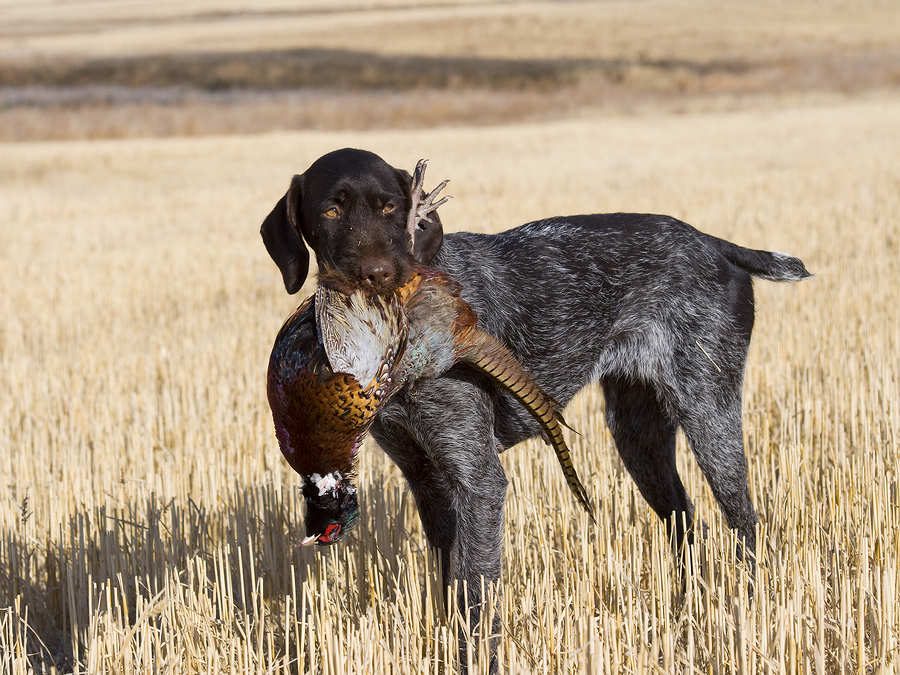
Pheasants (also known as upland birds) can fly, but favor staying on the ground to escape danger by running for cover rather than flying. Upland birds move quickly, so you need a shotgun that is lightweight, fast-acting and comfortable. The firearm’s weight should allow for a smooth swing through, steady leads and smooth, accurate shots.
Knowing the correct gauge for pheasant hunting is a critical choice for any hunter. Pheasants own the category of America’s toughest upland bird. They are strong, big birds, so the 12 gauge is the best option for pheasant hunting as it provides enough power and options to take down this bird with ease.
Pheasants have a habit of being taken down at a distance, as they tend to be warry and swift, so consider a 2-¾ inch shell 12 gauge with 1 ¼ ounces of #6 shot (lead) which yields 1,300 fps or 1-1/8 ounces of #3 shot (steel) at 1,500 fps.
If you want to be a successful pheasant hunter, you must allow your eyes to lead to where you think the pheasant will be going, then point your shotgun and shoot. You will never have the chance to aim, as pheasants are not particularly stationary, especially when airborne. The lesson here is that the gun will shoot to the pointing area of your focus, and the ability to feel the lead will help you be effective and successful in the field.
Summer Hunting Tips and Equipment
While summer hunting can be hot and slow, it is a great way to get ready for major hunting season to roll around in October. Depending on where you hunt, these summer hunts can be exhilarating, but may require a few additional considerations because of the summertime heat.
To avoid dehydration, make sure to bring plenty of water. The average person needs at least two quarts of water every day for survival and if you’re hunting in serious heat, you’ll need more. Most summer hunters will be out early in the morning or later in the evening when animals are more active.
Consider starting out well before daylight hours and use the heat of the day to scout and relax around camp. If you’re into camping, summertime hunting and camping trips can be a real treat to spend some time in the outdoors while having fun and not worrying about wintry weather conditions.
Summer hunts are a terrific way to help fill the void while in anticipation of other big game seasons. One thing you’ll undoubtedly want to do while you’re out is check off some or your pre-season hunting list rituals. Fall hunting season will come quicker than you think, and with the right upkeep and maintenance of your gear and equipment, as well as your favorite hunting spots, you can be certain to have boundless achievement no matter what the season.
Purchasing Gear and Equipment for Summer Hunting
Hinterland Outfitters simplifies the process of buying gear and equipment for all your summer hunting needs. With quality brands, fast shipping, affordable prices and industry-leading customer service, no other hunting supplier comes close.
Contact us for help deciding the right gear and equipment needed for summer hunting. Start the process by reviewing our How to Buy Guns Online information page then emailing us at sales@blog.hinterlandoutfitters.com or calling us toll free at 877-446-8370 to speak with one of our knowledgeable specialists. We look forward to helping you enjoy the rest of your summer and easing into hunting season.