
Single Barrel. Double Barrel. Over/Under. Side by Side. Single Shot. Repeater. Pump Action. Autoloader. Throw in that each is available in various gauges and barrel lengths, and the choices can be overwhelming. Whether you’re replacing a shotgun, adding a new gun to your collection or this will be your first shotgun, here’s everything you’ll need to know to make the right choice in this shotgun buying guide.
Shotgun Types and Actions
Shotguns have either one or two barrels. The four categories of single-barreled shotguns are Pump-Action, Autoloading, Single Shot Break Action and Bolt Action. The two types of Double-Barreled shotguns are Over/Under (O/U)and Side-by-Side (SxS).
Single shot shotguns
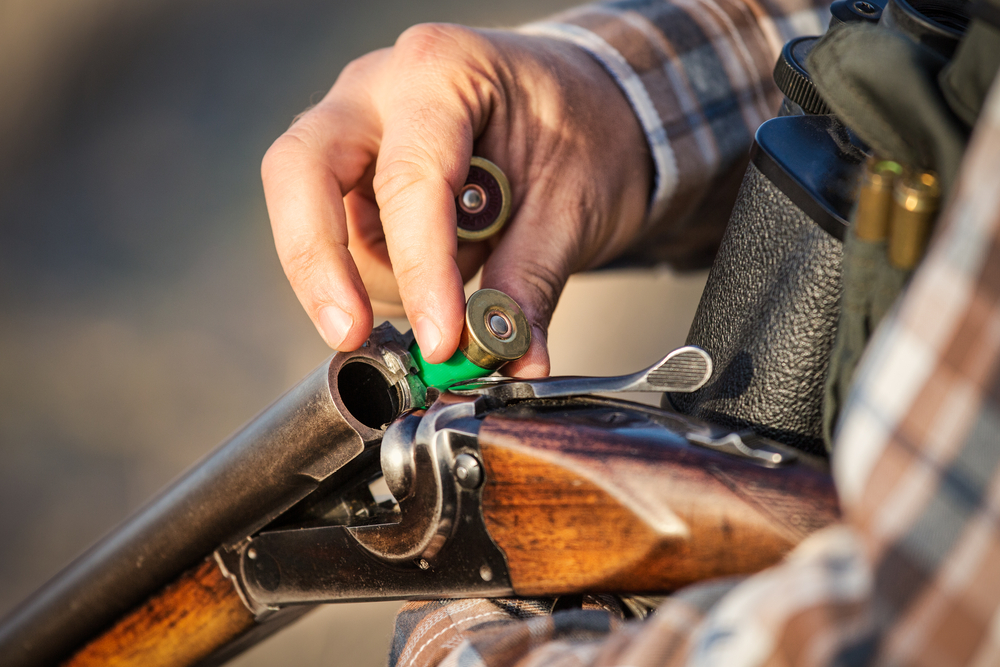
Single shot shotguns are the simplest, least expensive and safest of all shotgun types. Being break action guns, they’re a good choice for beginners. Unlike pumps and autoloaders, a single shot has no magazine and must be manually reloaded following each shot. A single shot is loaded by first disengaging the breach lever located where the receiver meets the stock. Once the lever is disengaged, the gun breaks open and is ready for a cartridge to be inserted into the chamber.
Single shot shotguns come in either exposed hammer or hammerless models. Shotguns with external hammers must be manually cocked using the thumb of the trigger hand before they can be fired. A hammerless gun’s trigger mechanism will cock when the action is either opened or closed, depending upon the make and model. After the shot is fired, disengaging the breach lever opens the gun, ejects the spent cartridge, and a new round can be manually inserted.
Single shot shotguns are lightweight, affordably priced and easy to clean. Other advantages are safety, simplicity, and reliability. Single shots also make excellent beginner’s guns, since the novice must learn to hit a target with one shot without the false sense of security that comes with knowing there are additional rounds available if the first shot is missed.
An obvious disadvantage of a single shot shotgun is that it must be manually reloaded after each shot. Because they are lightweight and have no mechanisms to help absorb the shock, recoil can be more noticeable than with an autoloader or pump.
Pump Action Shotguns
Pump Action Shotguns have been around since the 19th century. Most models today are hammerless and have a tubular magazine beneath the barrel. The magazine is loaded by inserting cartridges through the metallic flap immediately in front of the trigger guard until it is full. Load the final round by pushing the shotgun’s action release button, sliding the forearm back and inserting a round into the chamber through the open breach. Slide the forearm forward to close the breach, and the gun is ready to fire. A spent cartridge is ejected by pulling the forearm back, which simultaneously strips a live round from the magazine and positions it in the breach. Pushing the forearm forward to its original position will chamber the shell.
Pump shotguns are reliable, relatively inexpensive and simply constructed for easy cleaning and repairing. They are also less prone to jamming than autoloaders, making them an excellent defensive weapon. Rapid reloading, however, can be cumbersome, and may require practice.
Autoloader Shotguns
Autoloaders which is also referred to as a semi-auto will fire, eject a spent cartridge and chamber a new round each time the trigger is pulled until the magazine is empty. The semi-automatic shotgun is arguably the most lethal when compared to a pump-action shotgun, capable of putting the most lead down range as quickly as possible. Tactical semi-automatic shotguns don’t require the shooter to manually pump the action allowing for quicker follow-up shots and no chance of a “Short Stroke”. Semi-automatic shotguns are favored by law enforcement, military, home defense, competitive shooters and waterfowl hunters around the world.
The two primary types of auto-loading shotguns available currently are gas-operated or inertia-operated, the most popular and common being gas-operated. Benelli was originally the only manufacturer producing inertia based autoloaders, but the Italian manufacturer was bought by Beretta in the late 1980’s, so there are several more inertia-operated options these days.
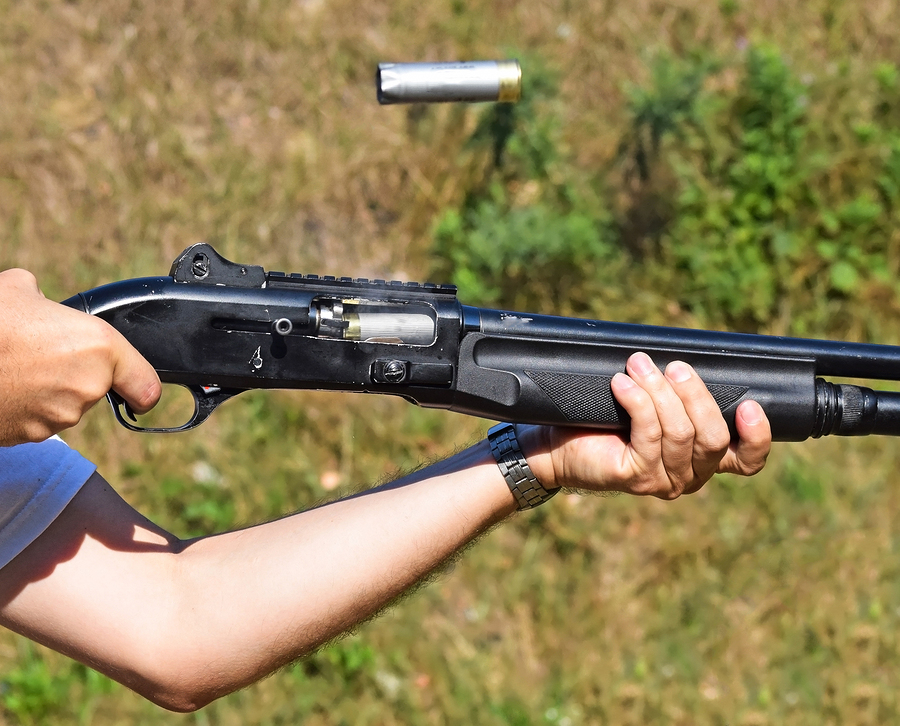
Inertia operation is similar to the short-recoil structure seen in most handguns. This system uses the recoil of the shotgun to complete the loading cycle by using the recoil to push the gun backward against the bolt carrier and the inertia spring inside the receiver. The spring is exceptionally stiff but moves just enough that when the spring returns it sends the bolt speeding back into the return spring, releasing the round and re-cocking the hammer. This process is not as complicated as it sounds. Picture a golfer hitting a golf ball. At impact, the golf ball compresses and returns to shape after it is launched away.
Gas-operated shotguns have led the pack for over a half-century. While certain models may use different methods to bleed the excess gas pressure in the tube, most function the same way. This style of shotgun uses a ring-shaped piston and the magazine tube as a guide. The gas pressure releases the round and moves another shell into the chamber. The gas pressure is regulated keeping the firearm functioning normally and reduces recoil.
Gas powered shotguns are usually going to be slightly larger than their inertia based counterparts but will have less recoil. Most high volume shooters and those who are more recoil sensitive shooters will, therefore, stick with a gas operated shotgun, but they will be required to clean their chosen shotgun far more often. One major advantage of inertia operation is its ability to fire hundreds of rounds and stay shockingly clean. Not having gas ports and pistons will help enhance reliability for those lazier shotgun owners. This, coupled with the slimmer profile found on an inertia based shotgun is why most birds and waterfowl hunters depend on reliability in harsh environments.
Double-barreled Shotguns
Double-barreled shotguns are similar in design and operation of a single shot, with the exception of having a second barrel, and in some instances, two triggers.
The two subcategories of double-barreled shotguns are over /under and side-by-sides, both of which are break action guns loaded and reloaded much the same as single shots. Most early doubles were side-by-sides with two triggers, one for each barrel, which can be cumbersome for beginners.
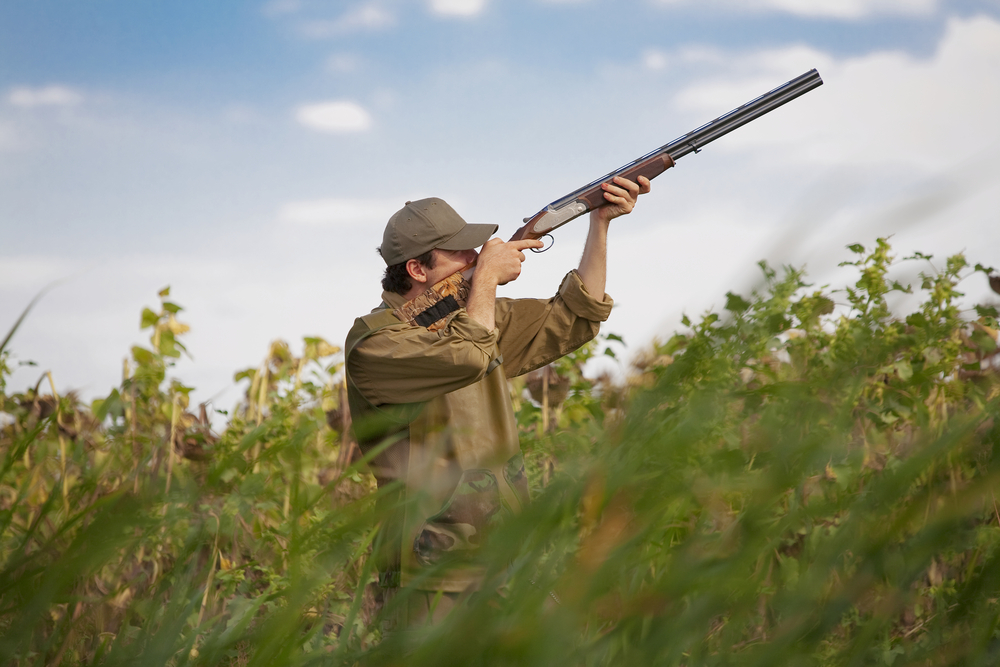
Over/Unders started to gain in popularity as hammerless shotguns became more common. Most of today’s sporting doubles are single-triggered O/Us with selector mechanisms to choose which barrel will fire first. Both over/unders and side-by-sides are widely used for hunting, competition clay shooting and personal defense.
An advantage of a double-barreled shotgun is that a second shot can be fired quickly without dismounting the gun from the shoulder. A second shot from a double gun can be fired more quickly than from a pump, and in the right hands can be faster than an autoloader.
Another advantage of doubles over single-barreled shotguns is having two choke sizes in the same gun for hitting targets at different distances. A more open choke is selected for the closer targets and a tighter choke for targets further away. More about chokes later.
A downside of double guns is that when used defensively, they need to be reloaded after only two shots. Choosing between an over /under and side-by-side shotgun ultimately comes down to a matter of personal preference.
Bolt Action Shotguns
Became somewhat popular in the years following World War II. Once manufactured by Mossberg, Savage, Marlin and several others, they were considered something of an inexpensive “one size fits all” shotgun that could be used for everything from hunting upland game, waterfowl and deer to home defense.
Bolt action shotguns operate the same as bolt action rifles. A handle, or bolt, is used to manually open and close the breach. The bolt is lifted upward and pulled to the rear, which ejects the spent round, cocks the firing mechanism, strips a new cartridge from the internal magazine and aligns it with the chamber. Pushing the bolt forward seats the round in the chamber. A final downward motion returns the bolt to its closed position, and the gun is ready to fire.
Bolt action shotguns are rugged, reliable and accurate. They are also low cost and lightweight. Because they have fewer moving parts than pumps or autoloaders, they can be easily disassembled for cleaning and maintenance. Bolt action shotguns are particularly suited to hunting deer and wild turkey.
Disadvantages of bolt action shotguns include having a slightly lower rate of fire than a pump, and a significantly lower firing rate than an autoloader. Although important in a self-defense situation, the slower rate of fire is a relatively minor drawback when hunting.
Shotgun Gauges
A shotgun’s gauge refers to the gun’s inside bore diameter expressed in terms of the number of lead balls of that same diameter needed to equal one pound. For example, it would take 12 lead balls each the same diameter as a 12-gauge shotgun’s bore to equal one pound. Similarly, each of twenty lead balls in a pound of lead would be the same diameter as the bore of a 20-gauge shotgun. With a few exceptions on either end, shotgun gauges range from the large 10-gauge to the much smaller .410.
10-Gauge Shotguns
10 gauge shotguns are the largest gauge legally available in the US. Once used extensively for hunting geese and other waterfowl, their popularity has declined in recent years. Remington dropped out of the market a couple of years’ ago, leaving Browning’s Gold 10 semiautomatic and BPS pump as the only 10-gauges still in production. Used today primarily by goose, duck and turkey hunters, 10-gauges are capable of cleanly killing waterfowl at far greater distances than smaller gauges, but are heavy and unwieldy to carry in the field or maneuver in a duck blind. Another drawback is that 10-gauge ammunition can be difficult to find.

12-Gauge Shotguns
12-gauge shotguns are the most versatile and widely-used shotguns around, representing more than half of all shotguns in the US today. Available in single and double-barreled break actions, bolt actions, autoloaders and pumps, 12-gauge guns are used for hunting everything from small game and waterfowl to deer and wild turkey. They are also popular among trap, skeet and sporting clay shooters. 12-gauge pump action shotguns are widely used by the military, law enforcement and as civilian self-defense weapons. A disadvantage of 12-gauge shotguns, when compared to smaller gauges, is the increased recoil, which can be a consideration for young beginners and smaller-statured shooters.

16-Gauge Shotguns
16-gauge shotguns were once America’s most popular shotguns. With bore a size halfway between 12 and 20-gauges, a 16-gauge makes an excellent all-around shotgun for shooting upland game, hunting waterfowl and self-defense.
The decline of the 16-gauge’s popularity has been linked to the growth of clay shooting as a sport, competition trap shooting is reserved exclusively for 12-gauge shooters. When organized skeet shooting began in 1926, the founders excluded 16-gauge shotguns from being used.

A 16-gauge is lighter and has less recoil than a 12-gauge, although the performance is almost the same. Still popular among traditionalists, one disadvantage of 16-gauge shotguns is that ammunition can be difficult to find.
20-Gauge Shotguns
20-gauge Shotguns weigh less than 12, 16 and 10-gauges, and their recoil is also less. Available in all action types, a 20-gauge is sometimes considered a beginner’s gun. Many experienced shooters, however, prefer them over larger bore sizes. A 20-gauge is an excellent choice for small game hunting and is also used extensively in competition skeet and sporting clay shooting. Although the effective range of a 20-gauge is less than a 12 or 16-gauge, it can still be an effective home defense weapon, since distance typically is not a factor.

28-Gauge Shotguns
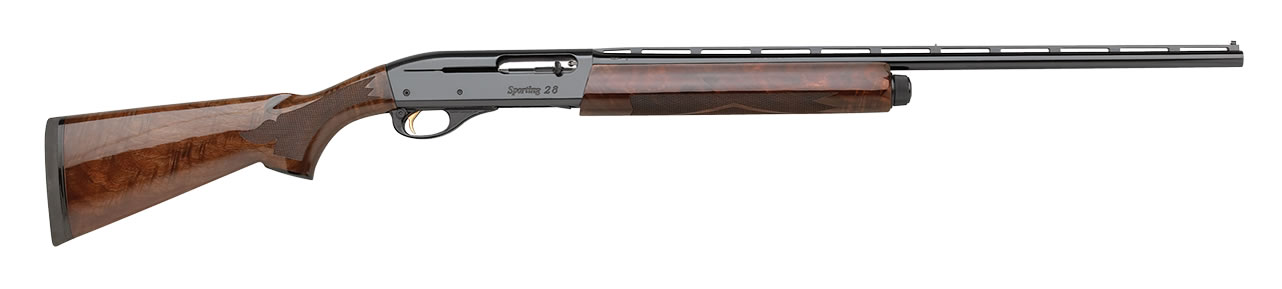
28-gauge Shotguns are relatively rare among today’s shotgunners. With a light recoil similar to a .410 and stopping power almost equal to that of a 20-gauge, a 28-gauge is considered the smallest gun suitable for hunting upland game. Being lightweight, they are a pleasure to carry in the field, although today most 28-gauges are used for competitive skeet shooting. Drawbacks of 28-gauge shotguns include limited availability of ammunition and ineffectiveness at long distances.
.410 Shotguns
.410 Shotguns are sometimes incorrectly categorized as a gauge of shotgun, which is incorrect. The smallest of all shotguns, 410s are firearms capable of firing .41 caliber cartridges loaded with lead, steel shot or rifled slugs. Suitable for shooting varmints or hunting rabbits, squirrels and close-range dove or quail,.410s are often beginner’s guns, since they are lightweight and have a very low recoil.

Some experienced skeet shooters prefer .410s because of the advanced skills required and the additional challenge they present. Being compact and lightweight, specially designed .410s with folding or removable stocks are also used as military and civilians survival weapons for emergency situations. A serious drawback of the .410 is that unless used by an expert familiar with its limitations, .410s will often cripple rather than cleanly kill game.
Shotgun Shells
Shotgun shells are paper or plastic cartridges with a brass base containing gunpowder, which is ignited when the primer cap built into the cartridge’s base is struck by the shotgun’s firing pin. Paper or plastic wadding separates the gunpowder from the shot in the upper portion of the cartridge. Until recently, shot was traditionally lead, but is increasingly being replaced by steel, bismuth or tungsten shot due largely to environmental regulations.
The three basic types of shotgun shells are High Brass, with a base of about ¾ inch, Low Brass, with a shorter metal base, and Active Shells, which are entirely encased in plastic except for the primer. High Brass cartridges contain more gunpowder and are more powerful than low brass cartridges. Active shells are primarily for hunters and outdoorsmen because they are impervious to wet weather.
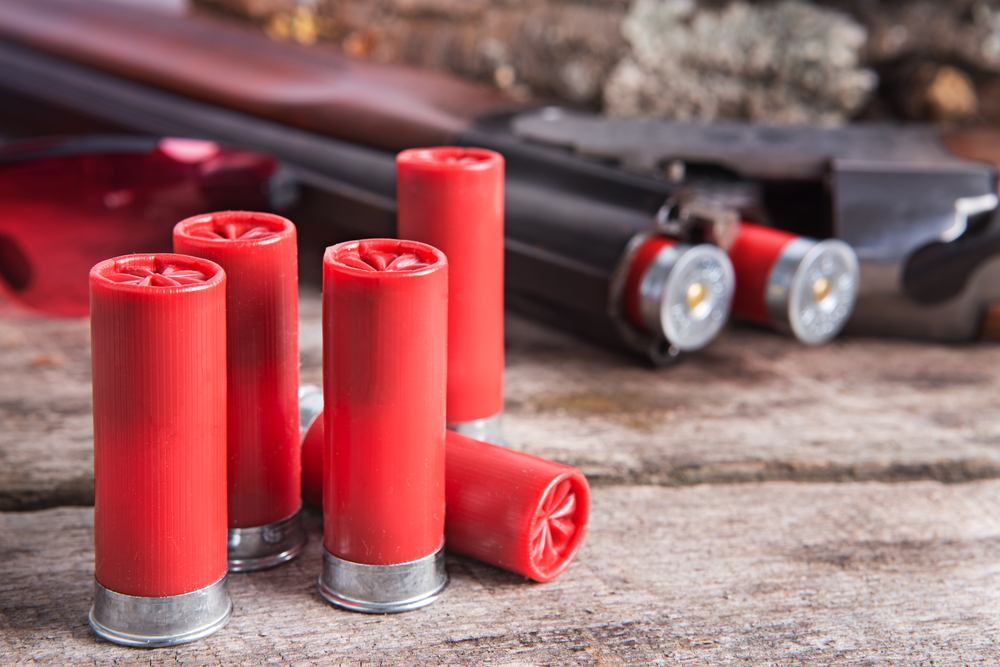
Cartridge loads range from hundreds of tiny spherical pellets as small as 1.75 mm called birdshot to a few much larger projectiles known as ‘buckshot”. Birdshot is sized numerically, with lower numbers being the larger shot. The most common birdshot sizes are #1 to #10, with #1 being the largest, and #10 the smallest. The larger #1 or #2 shot are generally recommended for shooting ducks and geese. The middle range of #4 through #7 ½ are used for upland game, while #7 or #8 are recommended for hunting quail and dove. The smaller #9 and #10 are used primarily for shooting clay targets.
Buckshot, used for hunting deer and other large game, is also sized numerically. The three most common sizes are 0 “single ought” (8.1 mm), “double ought” 000 (8.38 mm)and “triple ought” (9.1 mm). Buckshot is used by the military and law enforcement, and is the recommended load for home defense.
Other types of shotgun cartridge loads include a single lead projectile with rifling known variously as rifled slugs, sabots or Brenneke, which are used for hunting deer and other large game. Some other load types include emergency signal flares and non-lethal rubber or “beanbag” loads used for riot control.
Shotgun Barrels
Shotguns come in various barrel lengths. Selecting the correct length depends in part upon the gun’s intended use. The shortest shotgun barrel length a private US citizen can legally possess is 18 inches.
Although they may have barrels of the same length, double-barreled shotguns are approximately four inches shorter in overall length than pumps or autoloaders because they have no internal magazines or loading mechanisms.
Longer and heavier barrels will swing more smoothly when tracking a target. Shorter barrels are more maneuverable, which can be a consideration when hunting in heavy brush or shooting from within the confines of a duck blind.
Generally speaking, longer barrels allow for more precise pointing and provide a smoother, more fluid swing. Barrels of 28 to 30 inches are recommended for shooting upland game and waterfowl. Trap shooters usually prefer barrels of 30 inches or longer, while 26 inches is considered a good barrel length for shooting skeet. Barrels of less than 26 inches are not recommended for wingshooting.
Riot guns and other tactical shotguns usually have barrel lengths of 24 inches or shorter, with 20 inches being the standard.
Stock Types
Shotgun stocks and forends are constructed either of wood or synthetic composites. Exceptions are metal folding stocks on some tactical weapons.
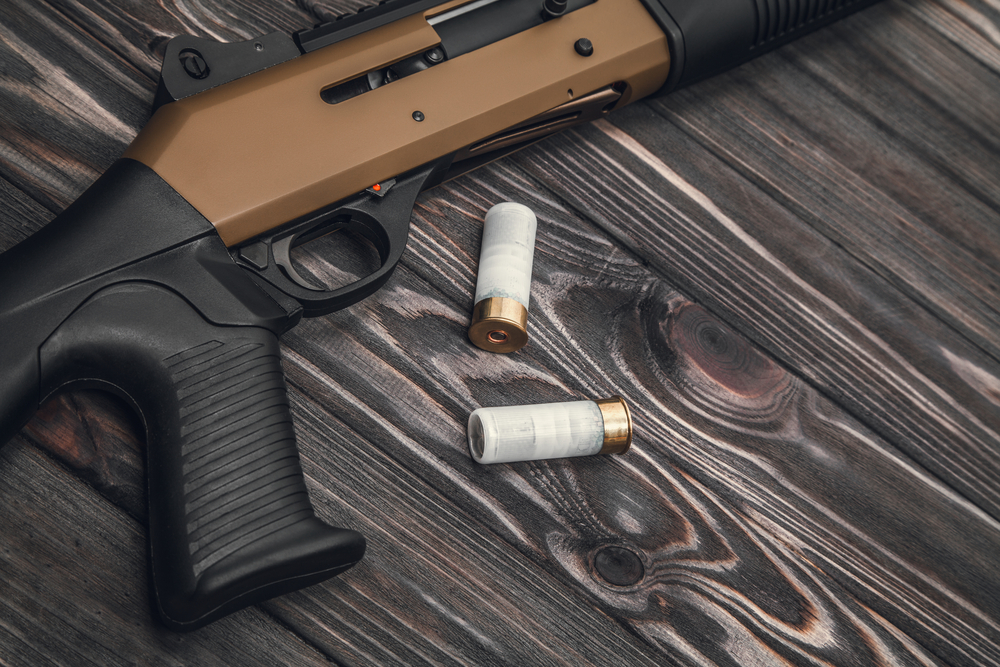
Wooden stocks are traditional, functional and aesthetically pleasing. Walnut is the preferred wood for gunstocks, although other hardwoods such as maple, myrtle, birch and mesquite are also used. Regardless of the wood type, it must be dried slowly for months or even years to prevent splitting and preserve its natural color. Wooden blanks range in price from around $20 for a no frills stock to $2,000 or more for an exhibition grade custom stock.
Some synthetic stocks are injection molded at costs considerably less than even the cheapest wooden stocks. Every stock produced is identical, and requires no finishing, bedding or inletting to fit the barrel and action to the stock Laminated stocks, however, lack rigidity and thermal stability, meaning they are susceptible to heat or ultraviolet deterioration. Composite stocks made from materials such as fiberglass or Kevlar are stronger and more stable and weigh considerably less than injection-molded stocks.
Shotgun Uses
Shotguns are used for hunting, tactical & personal defense and competition sports shooting.
The gauge and barrel length of shotguns used for hunting depends in part upon the game being hunted. Pumps, autoloaders, single shots, double barreled and bolt-action shotguns are all suitable for hunting upland game, depending upon the hunter’s preference and budget. Shotguns in 12, 16 and 20-gauges with 26 to 30-inch barrels are the norm.
When hunting migratory waterfowl, longer barreled, heavier gauge shotguns are recommended because ducks and geese are typically shot at greater distances than upland game. As with upland game, shotguns with any type of action can be used for shooting waterfowl.
Hunting deer or other large game with a smoothbore shotgun requires using either buckshot or lead slugs. There are also shotguns with rifled barrels intended specifically for hunting large game. Although smaller gauges can be used, 12-gauge shotguns are recommended for shooting bigger game.
Tactical shotguns used by the military and law enforcement are typically 12-gauge, 18 to 20-inch barreled weapons with shoulder-mounted stocks, pistol grip stocks, or a hybrid blend of the two. Pump actions are preferred over automatics since autoloaders are more susceptible to jamming.
Shotguns of virtually any type, action or gauge can be used for home defense, although shorter barreled, 12-gauge pump guns with heavy cartridge loads and either standard or pistol grip stocks are preferred.
12-gauge pump, double-barreled or autoloading shotguns with 28 to 30-inch or longer barrels are used for shooting trap. When shooting skeet, shotguns with a 26 to 28 inch-barrel are normally used, because skeet includes some two-target crossover situations requiring a quickly fired second shot. Most skeet shooters prefer either double-barreled or autoloading shotguns, although pumps can also be used.
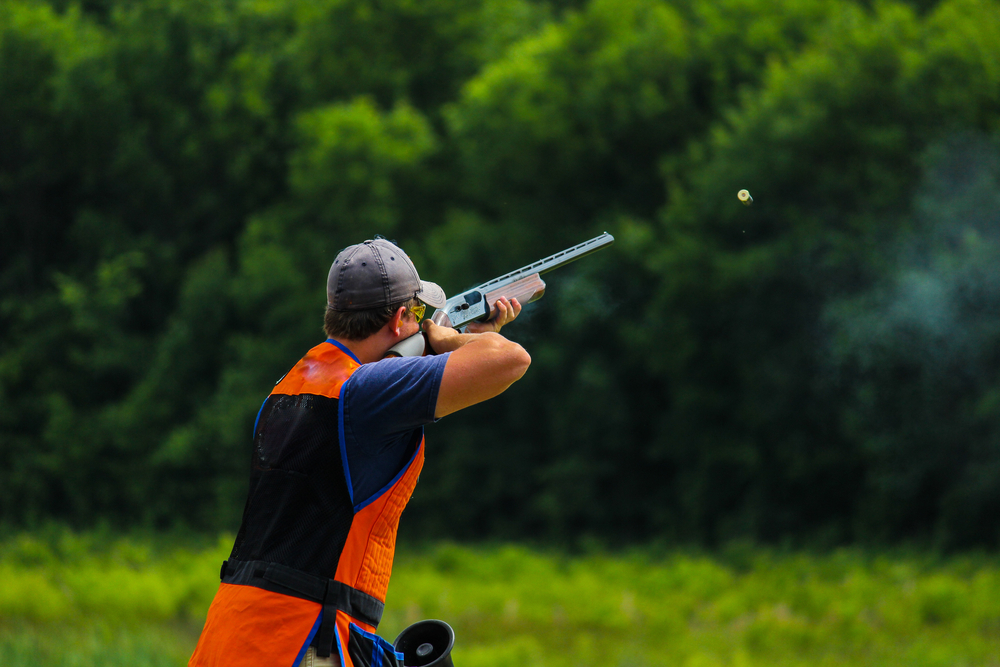
The third category of competition shotgun shooting is Sporting Clays, which are mechanically launched clay targets intended to simulate various field shooting conditions. Over/Unders with 30 to 32-inch barrels and two different sized chokes are the shotgun of choice for shooting sporting clays, with semi-automatics being a close second.
Choke Tubes
Made of metal, chokes constrict a shotgun barrel’s bore at the muzzle, which spreads the shot pattern to control its effective range and accuracy. Chokes can be either interchangeable screw-in types or permanently integrated into the barrel.
The most common interchangeable shotgun chokes in inverse order of constriction are Full, Modified, Improved Cylinder, Cylinder, and Skeet. A full choke has tight constriction that produces a dense shot pattern that carries further. Full chokes are used when shooting trap, high-flying waterfowl, turkey and when using buckshot.
Modified chokes are less constricting than full chokes, and are used to hunt small game, distant-flushing pheasant or quail and low-flying waterfowl hunting over decoys. Modified chokes are also sometimes used by trap shooters.
Improved cylinder chokes are used for shooting low-flying waterfowl and close flushing game birds. Improved cylinder chokes are also recommended when shooting rifled slugs.
Being only 1/100th of an inch narrower than the shotgun’s bore Cylinder chokes provide no constriction and are often found in shotguns used by law enforcement.
Skeet chokes provide a wide shot pattern at 25 yards and are designed specifically for shooting clay targets at close range. For more information on chokes or to view our extensive selection, visit Hinterland Outfitters’ Choke Tubes page.
Hinterland Outfitters makes buying shotguns online simple. Our huge inventory includes shotguns to fit virtually any budget. Now that you’re armed with the information needed to help you decide between a single or double-barreled shotgun and the right gauge, action type and barrel length for the gun’s intended use, start the process by reviewing How to Buy Firearms Online, emailing us at sales@blog.hinterlandoutfitters.com or calling us toll free at 877-446-8370. You’ll be glad you did.