
Compound bows are easily distinguished from conventional bows by their multiple strings, cables, pulleys and cams. Capable of launching arrows at speeds of up to 350 feet per second (fps) or more, compound bows are used both for hunting and various archery competitions, including target archery, multi-target field archery and 3D archery.
History of Compound Bows
Bows have been used to launch arrows for hunting and battle for more than 60,000 years. Compound bows, however, are relatively new on the archery scene, and are a far cry from the primitive wooden staffs strung with sinew, hemp or flax used by our ancestors.
Developed by Montana mechanic and archer Holles Wilbur Allen in the mid-1960s, the compound bow is the most popular bow type for sale in America today. Allen shortened the limbs of a recurve bow and attached cam-shaped pulleys to the ends, which increased the bow system’s mechanical advantage for launching arrows. These changes enabled the archer to pull more weight, which improved the bow’s draw length and increased the energy transferred from the shooter’s body and stored in the bow’s limbs when the bowstring is drawn back. Unlike traditional recurve bows or longbows, compound bows remain strung even when not in use. By 1996, compound bows had been accepted for use in the World Target Archery Championship competition, which helped further advance their popularity among archers.
Anatomy of a Compound Bow
Compound bows for sale today have a multitude of complex moving parts over and above the straightforward grip, limbs and bowstrings of the much simpler recurve bows and longbows. Here are some of the compound bow’s basic parts:

- The riser is the middle section of the bow where the handgrip is located, and where the arrow rest and sight are attached. Although often made from aluminum, risers on many of today’s high-end compound bows are constructed from carbon fiber, which reduces the bow’s overall weight. A quiver used to hold spare arrows and a bow stabilizer that adds weight below the grip to help balance the bow are also mounted on the riser. The stabilizer’s other function is to absorb and lessen the shock to the archer’s hand when an arrow is released.
- The limbs of a compound bow are the flexible sections attached above and below the riser. Made from wood, fiberglass or composites, limbs are an important component of compound bows, since that’s where the energy generated when the archer draws back the bowstring is stored. Cams are attached to the ends of both the upper and lower limbs.
- Cams are what make a bow compound rather than simple. With traditional bows, the further the string is pulled back, the harder it becomes to pull. Cams, however, change the bow’s draw weight, which is the maximum weight at which an archer can hold the bow steady as the string is drawn back. With conventional bows, the further the bowstring is pulled back, the more difficult it becomes to hold the bow steady. With a compound bow, cams actually make pulling back easier rather than harder after the string is drawn beyond a certain point, called the let-off, although the energy stored in the limbs is the same as if using a traditional bow.
- When it’s released, the bowstring uses the energy stored in the bow’s upper and lower limbs to launch the arrow. Most modern-day bowstrings are made from synthetic materials such as Dacron wrapped with nylon thread that won’t stretch or lose tension with use and age. Although less common, steel wire is also sometimes used for stringing compound bows.
- Cables extended between the cams at either end of the bow are what cause them to move when the bowstring is drawn back. The cables are kept away from the bow’s center and out of the arrow’s path by a fiberglass rod called a cable guard.
- The arrow rest or arrow shelf is where the arrow lays alongside the bow before the bowstring is drawn back. There are several types of arrow rests available, including the “whisker biscuit,” which is a circular containment rest that holds the arrow in place by totally encircling it with soft, synthetic bristles that let the arrow shaft and fletching pass through easily. Another type of arrow rest is the drop-away, which is attached to the riser by a short cord that drops down when the bowstring is released, letting the arrow fly unhampered without its shaft or feather fletching touching the rest and disturbing the flight path.
- The bow’s sight is a device affixed to the riser that helps the archer aim the bow accurately. The most common type of bow aiming device is the fixed pin system with three to five pins within a sight circle, each of which has been pre-set for known distances. When used properly, even beginners can shoot accurately with fixed pin sights. Rangefinders are also sometimes used, although most archers find that over time and with practice, they’re able to accurately judge distances without the aid of a sight or rangefinder.
- Compound bow options include a string vibration arrester, which is a device affixed to the riser that helps reduce sound created by the bowstring’s vibration when an arrow is launched. Another option is a stabilizing rod, which is attached to the bow just below the grip to help keep the bow steady while aiming.
The Mechanics of Compound Bows
Today’s compound bows are by far the most powerful, accurate and easiest to use bows ever made, due primarily to the mechanical cams attached to the ends of the bow’s two limbs.
The four types of cam systems are single cam, hybrid cams, binary cams and twin cams. Most archers new to using compound bows choose single cam systems, which are quieter and easier to maintain. Single cams are by far the most popular of the four types, and as such, is the system discussed in this guide.
Single cam systems have a round idler wheel attached to the bow’s top limb and an elliptically shaped power cam attached to the lower limb. Working together, their purpose is to create a let-off, which is a partial relaxation of the draw weight, typically somewhere between 60 and 80 percent. The effect of the let-off is that the archer needs to hold only 20-40% of the draw weight after the bowstring is drawn without losing any of the power stored in the limbs. The result of less draw weight is that the hunter or target shooter can hold the draw longer, allowing him or her to keep the bow steady, which gives more time to aim carefully for increased accuracy. Cam systems can be engineered to provide optimized arrow speed, shooter comfort or a combination of the two.
Although the technical aspects of compound bows can be overwhelming to the uninitiated, the archery specialists at Hinterland Outfitters will explain the mechanics and uses in easy-to-understand terms to help you decide among the various types of compound bows for sale that will most closely meet your needs.
Matching a Compound Bow with the Archer
Sectioning a bow will often come down to your experience, what you will be doing with the bow, and your personal preference. Two primary considerations are draw weight and draw length.
A compound bow’s mechanical advantages of stored energy and leverage allow it to launch an arrow faster and further than traditional bows of the same draw weight. Draw weight, expressed in pounds, is the maximum amount of pull the archer’s fingertips can endure when the bowstring is fully drawn back. Draw weights vary with the individual, depending upon his or her body weight and physical frame. The maximum practical draw weight for an average adult male is 55 to 65 pounds. Recommended draw weights for women and young people range from 30 to 50 pounds, again depending upon each shooter’s size and weight.
A compound bow’s draw length is the maximum distance the archer can pull back the bowstring and still maintain control and accuracy. Compound bows can be adjusted and set to the correct draw length, which, as with draw weight, will vary among shooters. A simple method of determining your proper draw length is to stand with your back against a wall, fully extend your arms parallel to the floor, and have someone measure the distance between the fingertips of both hands. Divide the result by 2.5, and that’s your correct draw length.

As an example, if your arm span is 72”, divide 72 by 2.5. The result is just under 29”, which is your correct draw length and where your compound bow should be set. Since most people’s height in inches will be the same as their fully extended arm span, an easy way to double check the draw length calculation is to divide your height by 2.5 and the two results should be almost identical.
Another important thing to consider is the compound bow’s Axle-to-axle length (ATA), which is the distance between the axles of the cams. The longer the ATA, the easier it will be to hold the bow in a steady vertical position. Depending on the application, some may prefer a bow with a shorter ATA because it will be easier to maneuver in the field. Most hunters will prefer their hunting bows to have an ATA between 31” and 34”.
Bow Weight– Generally speaking, the heavier the bow, the easier it is to steady. With that being said, a heavier bow can fatigue an archer more quickly. Lightweight bows will take more practice for one to master but may be a better fit for a hunting bow. Most hunting bows will weigh between 4 to 4.25 pounds without any added accessories.
Brace height– Brace height is the distance from the string’s resting position to the groove in the bow’s grip. The brace height greatly influences a bow’s power stroke and effects the arrows speed. A shorter brace height will increase the arrow speed but also affected more by errors in the archer’s form. The most common brace height is between 6” to 7”.
Arrows
An arrow is a slender projectile launched from a bow that consists of four parts, which are the shaft, fletching, arrowhead and nock.

- The shaft is the structural portion of the arrow to which the other three components are attached. Arrow shafts generally range in length from 30” to 38”. Early shafts were made from wood, reeds or bamboo. Shafts today are constructed of aluminum, fiberglass, carbon fiber reinforced plastic or aluminum encased in an outer layer of carbon fiber. Regardless of the material, when an arrow is released, the shaft will initially bend before straightening during flight. Whatever material is used, the shaft’s resistance to bending, which is called spine, needs to match the bow from which the arrow is launched for optimum accuracy. Too much or too little spine will cause the arrow to fly erratically.
- The arrowhead is the projectile’s pointed tip. Several different types of tip are available, depending on how the arrow will be used. Arrowheads can be as basic as simply a sharpened tip of the arrow’s shaft. Broadhead tips used by hunters for taking game have two to four sharpened blades, which are either rigid fixed blades for deep penetration or mechanical blades that swing outward when the target is hit. Target point arrowheads are metallic conical tips that will penetrate practice targets but can be easily removed with minimal damage to the target. Similar in weight and flight characteristics to broadheads, field tips are used by hunters for archery practice.
- The three or more feather or plastic vanes attached to the lower end of the shaft are called Generally 2” to 6” long, fletching provides stability and increases accuracy by causing the arrow to spin in flight much like the rifling in a firearm. Broadhead tipped arrows need long and higher profile fletching vanes to counter the arrowhead’s destabilizing aerodynamic effects while in flight.
- A nock is a small slot at the bottom of the arrow just behind the fletching that snaps onto the bowstring at its nocking point, which is a small metal, plastic or thread device attached to the bowstring. The nock’s purpose is to ensure that arrows are consistently launched from the same position. Nocks are either cut into the rear of the arrow’s shaft or are a separate piece sized to fit snugly over the shaft’s body.
Compound Bow Uses
Bows and arrows have been used for waging war and hunting game for thousands of years. The technology has evolved from hand-crafted wood shafts with sharpened tips launched from crude lengths of flexible wood strung with animal gut to today’s accurate, precision-made devices that fire perfectly dimensioned and balanced arrows. Bows and arrows largely replaced firearms as weapons in the late 16th century, leaving hunting and target shooting as the two primary archery activities.
Hunting
Hunting deer, elk or similar sized game with bows can extend the hunting season in many areas by two or more months beyond the rifle-hunting season. Advantages of hunting with compound bows as opposed to longbows or recurves include being able to lessen the weight the hunter needs to draw back and hold while aiming. A compound bow’s increased power also results in cleaner kills, meaning there’s less chance of fatally wounding an animal that escapes into the bush before the hunter can put it down.
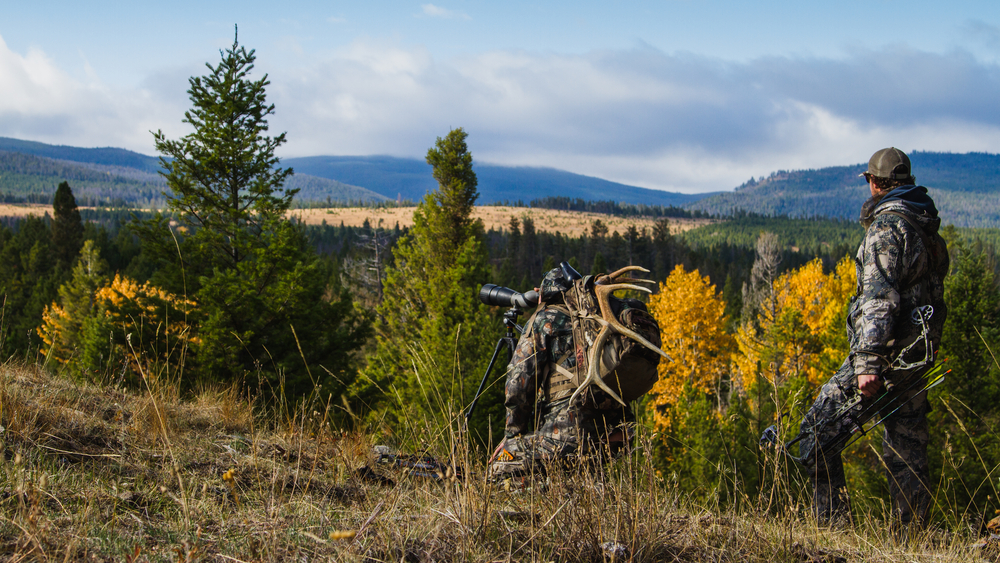
The three primary types of archery competitions where compound bows are used are target archery, multi-target field archery and 3D archery.
Target archery involves shooting at stationary bull’s-eye targets. This is a great starting point for beginners, since it can be easily set up and practiced either indoors or outdoors. Target archery is the type of archery event featured in the International Olympic Games.
Multi-target field archery also consists of shooting at stationary targets, although the targets are placed along a course that meanders through a wooded area to simulate natural hunting conditions. Archers are challenged by shooting targets placed at various distances throughout a course that usually will include some difficult uphill and downhill shooting.
Competitive 3D archery is another favorite among outdoor-loving archers. Also taking place along a course through wooded settings, archers shoot at life size, 3-dimensional foam silhouettes of deer and other game animals placed at varying distances along the way. Beginners shoot targets at closer distances, while the shots become increasingly more challenging for experienced archers.
Whatever archery competition type interests you, you’ll find the right compound bows for sale at Hinterland outfitters.
Buying a Compound Bow
To get started in this exciting sport or to step up from a conventional bow, check out our extensive selection of compound bows for sale at prices to fit every budget. We also have the arrows, accessories, targets and everything else you’ll need to take part in the exciting pastime of compound bow archery. Call Hinterland Outfitters at 877-446-8370 or email us at info@blog.hinterlandoutfitters.com for one of our knowledgeable archery specialists to answer your questions and help you choose the compound bow systems that’s right for you.
Related Blogs: